Study Notes

Free study tips and exam prep notes to help you pass on your first try.
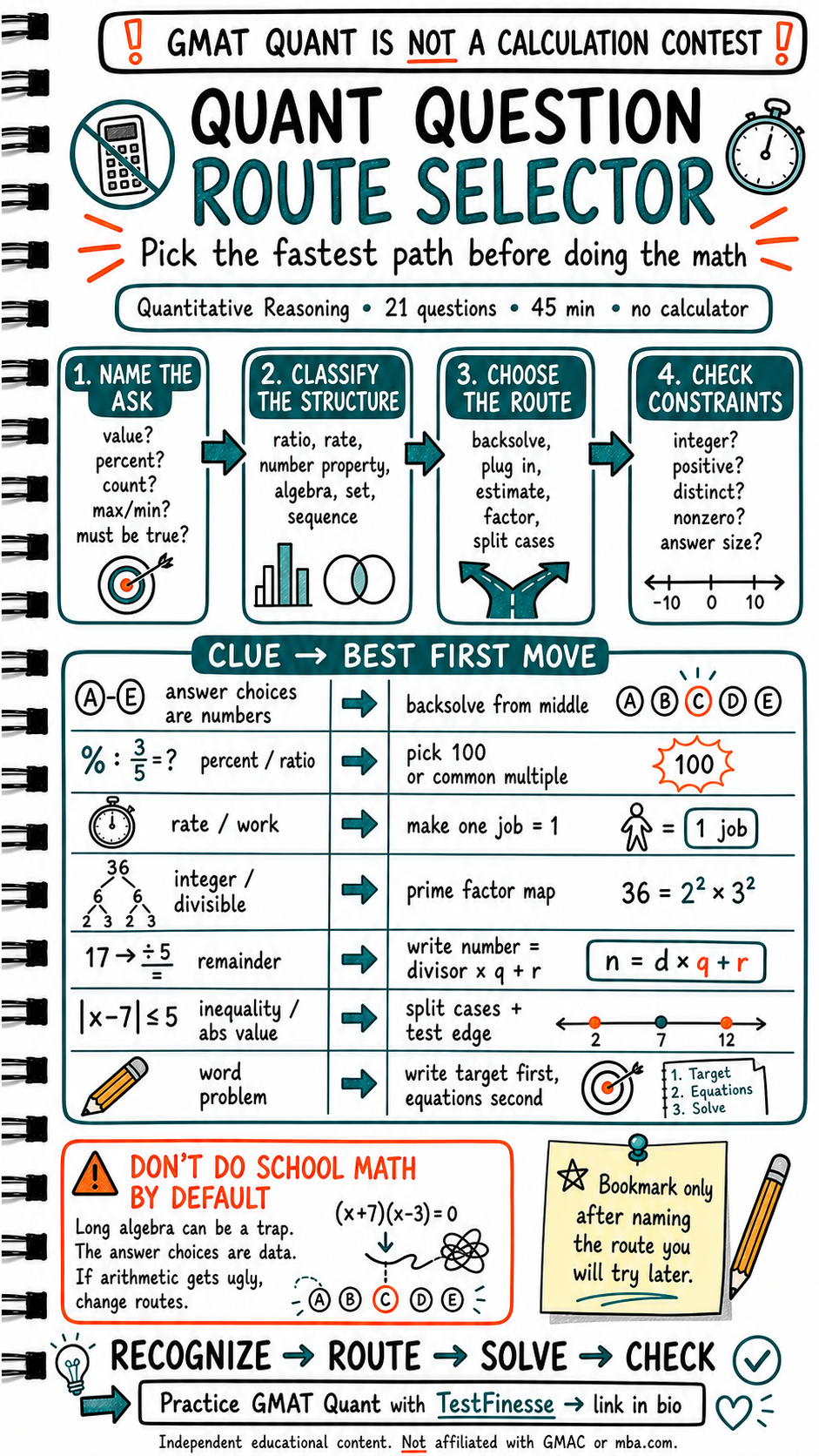
Infographic explaining a GMAT Quant route selector with steps to name the ask, classify the structure, choose a solving route, check constraints, and avoid long algebra traps.

GMAT Quant Question Route Selector: Pick the Fastest Path Before Doing the Math
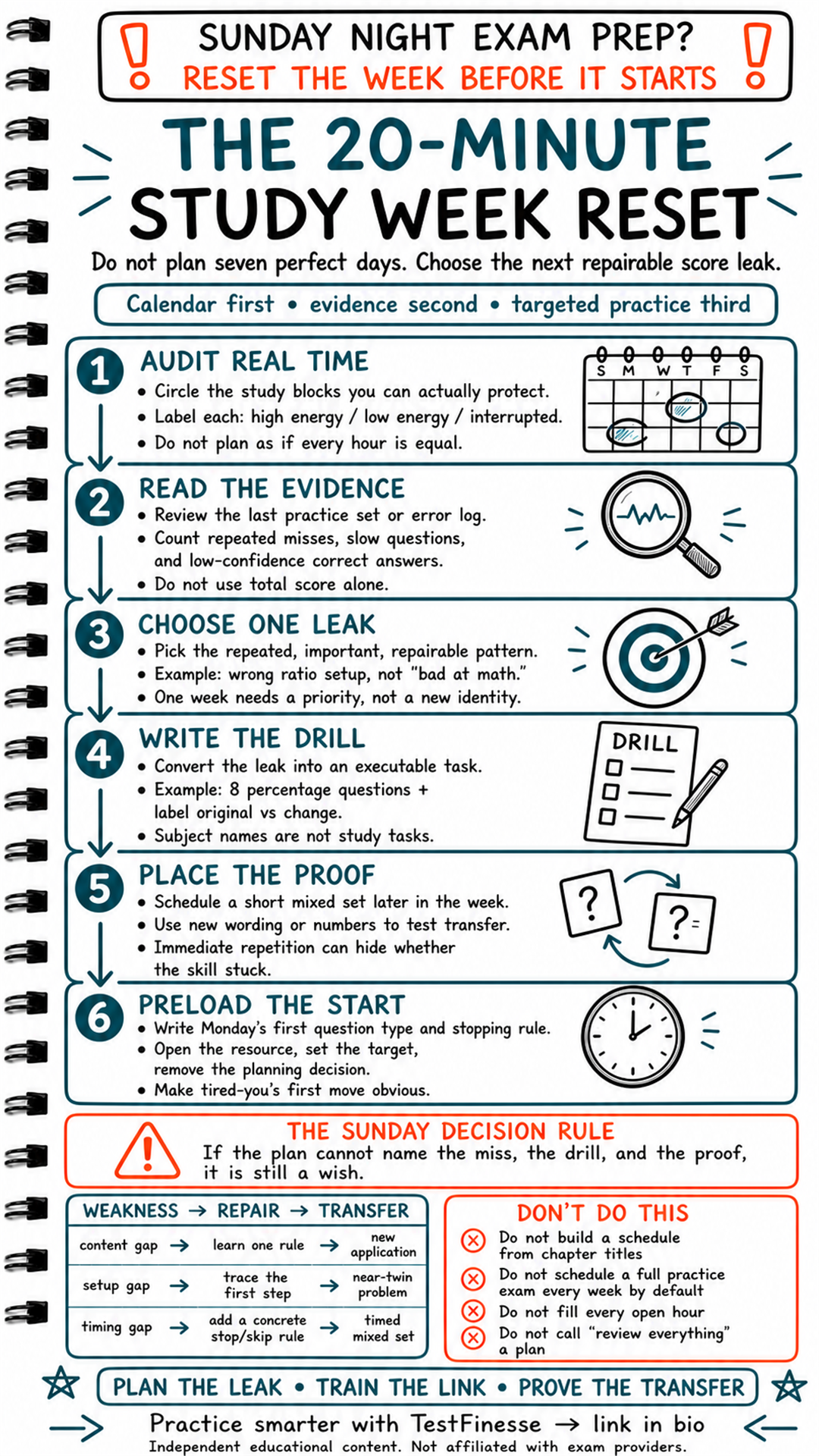
Infographic showing a practice score plateau audit with steps to sort misses, find the biggest error bucket, run micro-drills, and retest the skill.

Practice Score Plateau Audit: Find the Leak Before Taking Another Test

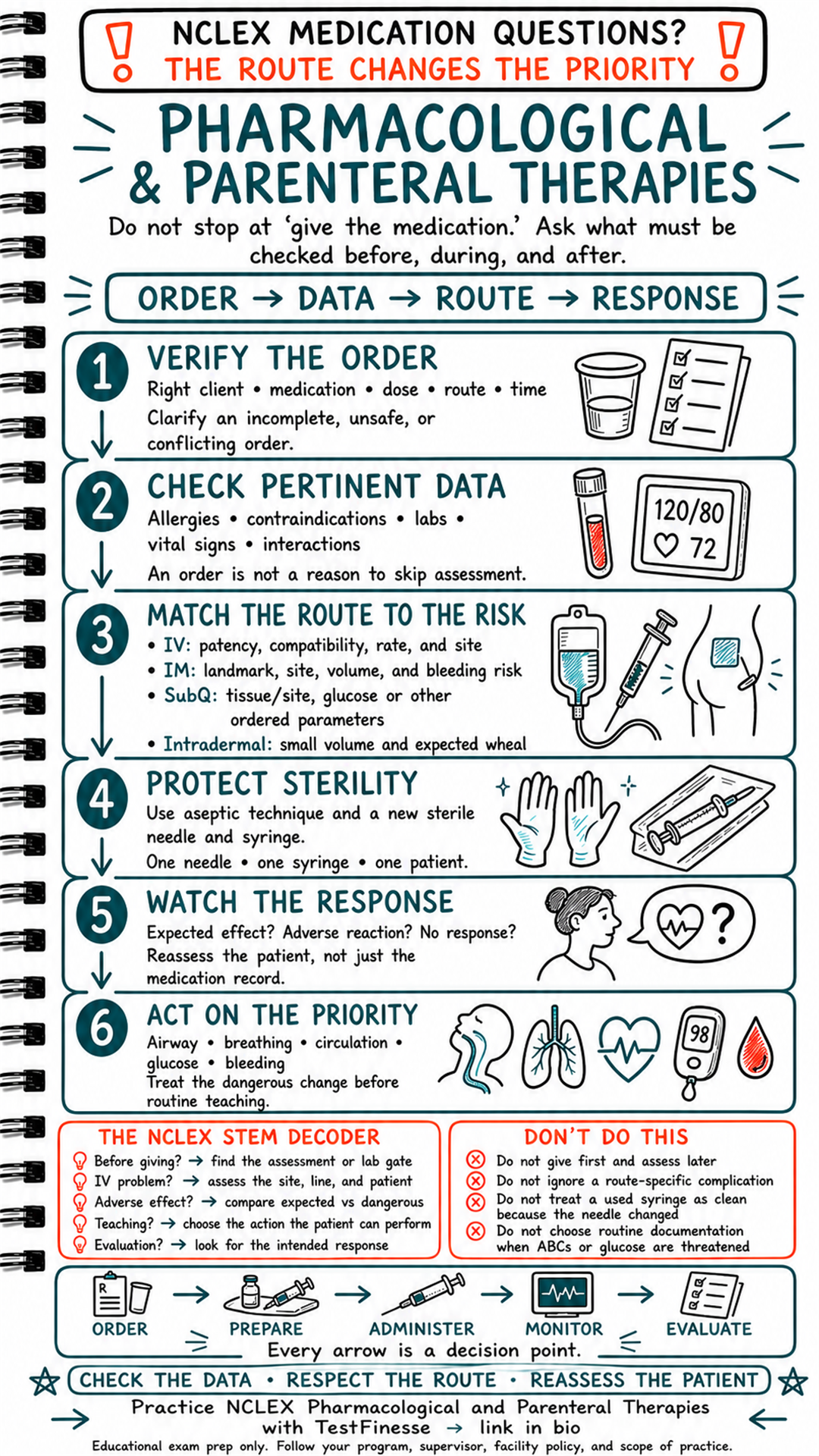
Infographic explaining an NCLEX medication math setup map with unit conversion steps, dosage formula families, IV pump rates, drip rates, reconstitution, and rounding traps.

Medication Math Setup Map: How to Stop Losing NCLEX Points to Unit Misses
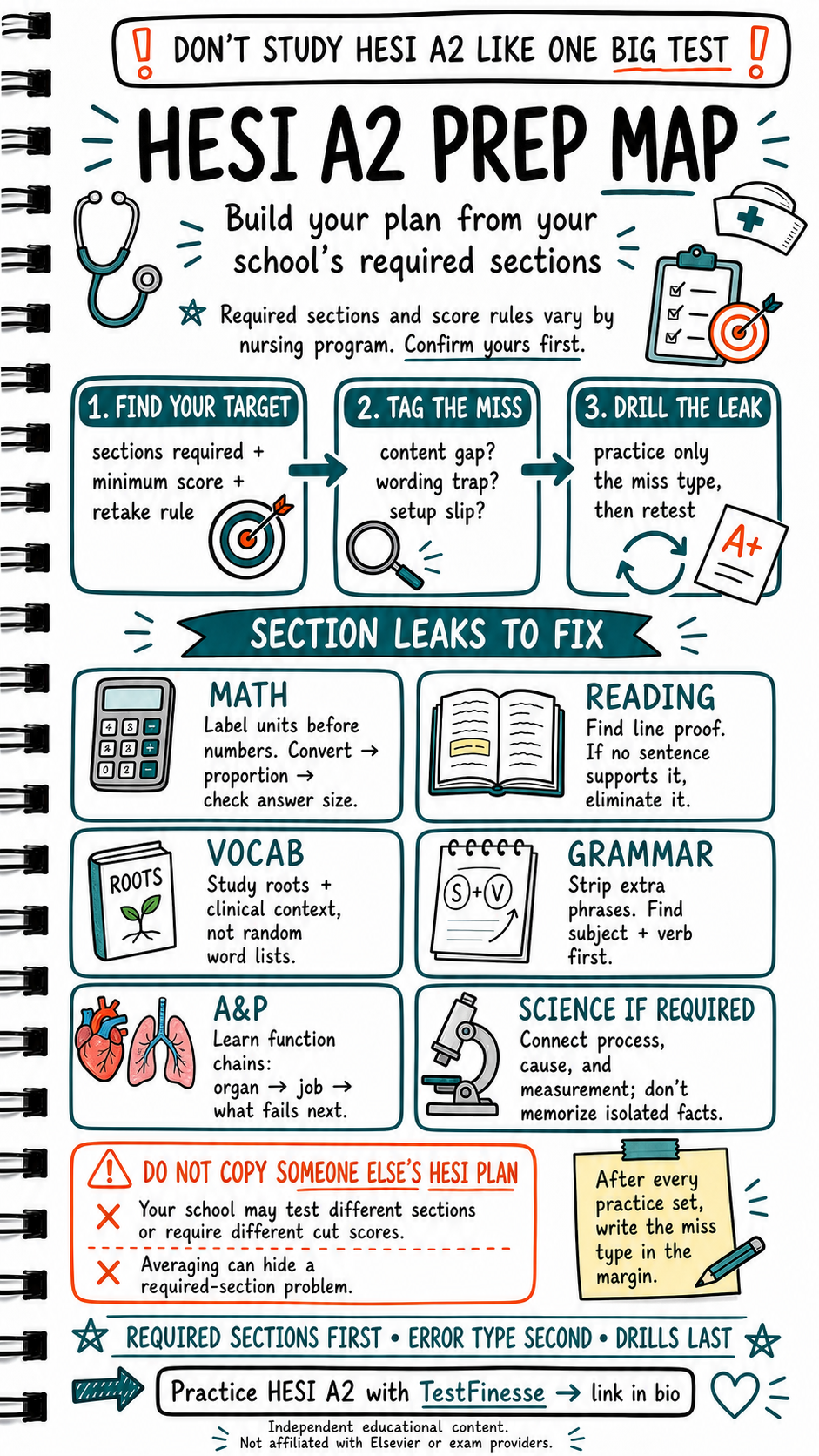
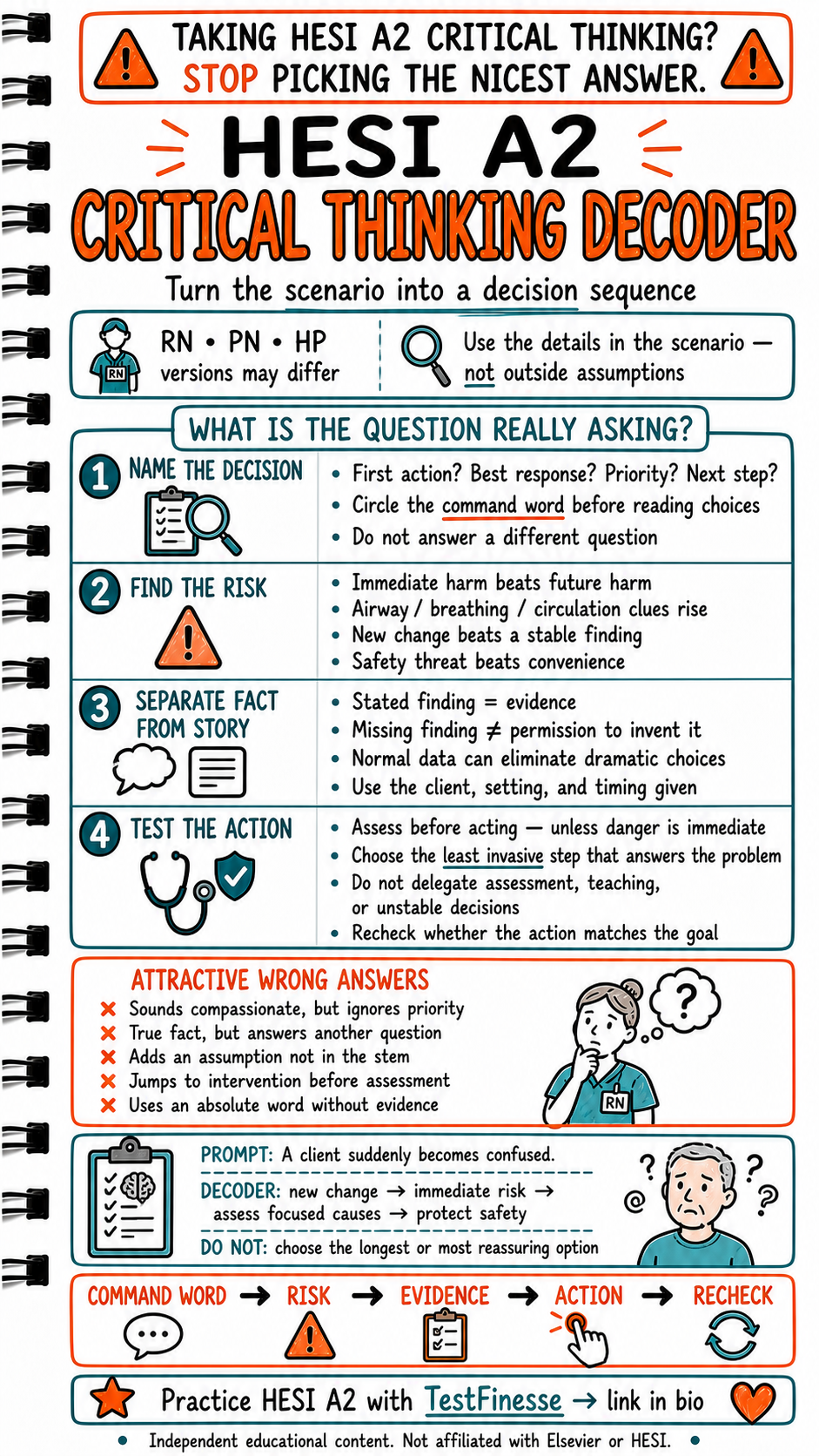
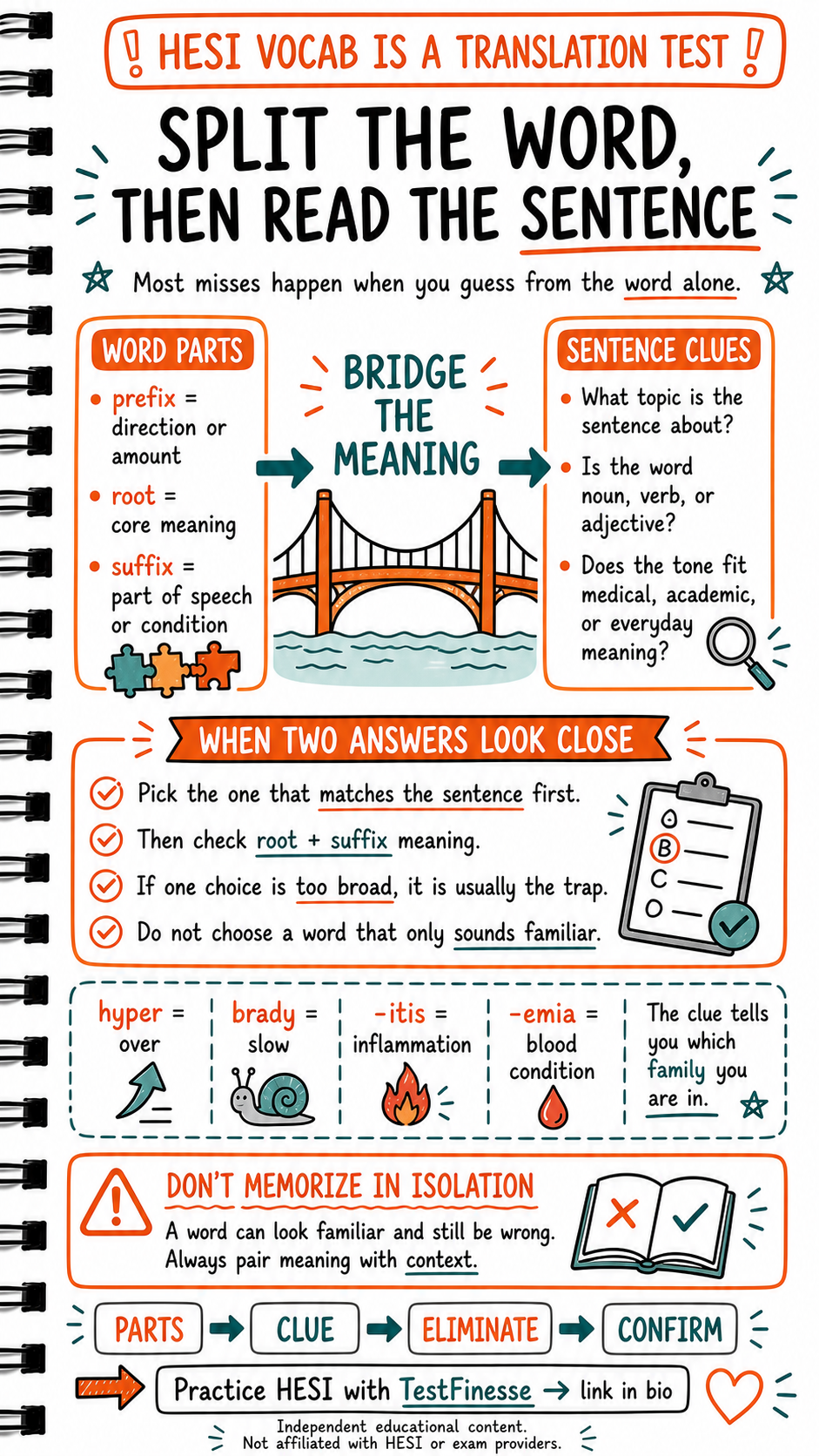
Infographic showing a HESI A2 prep map that helps students find their required sections, tag missed questions by error type, drill section-specific score leaks, and avoid copying another school’s HESI plan.

HESI A2 Prep Map: Build Your Study Plan From Your School’s Required Sections
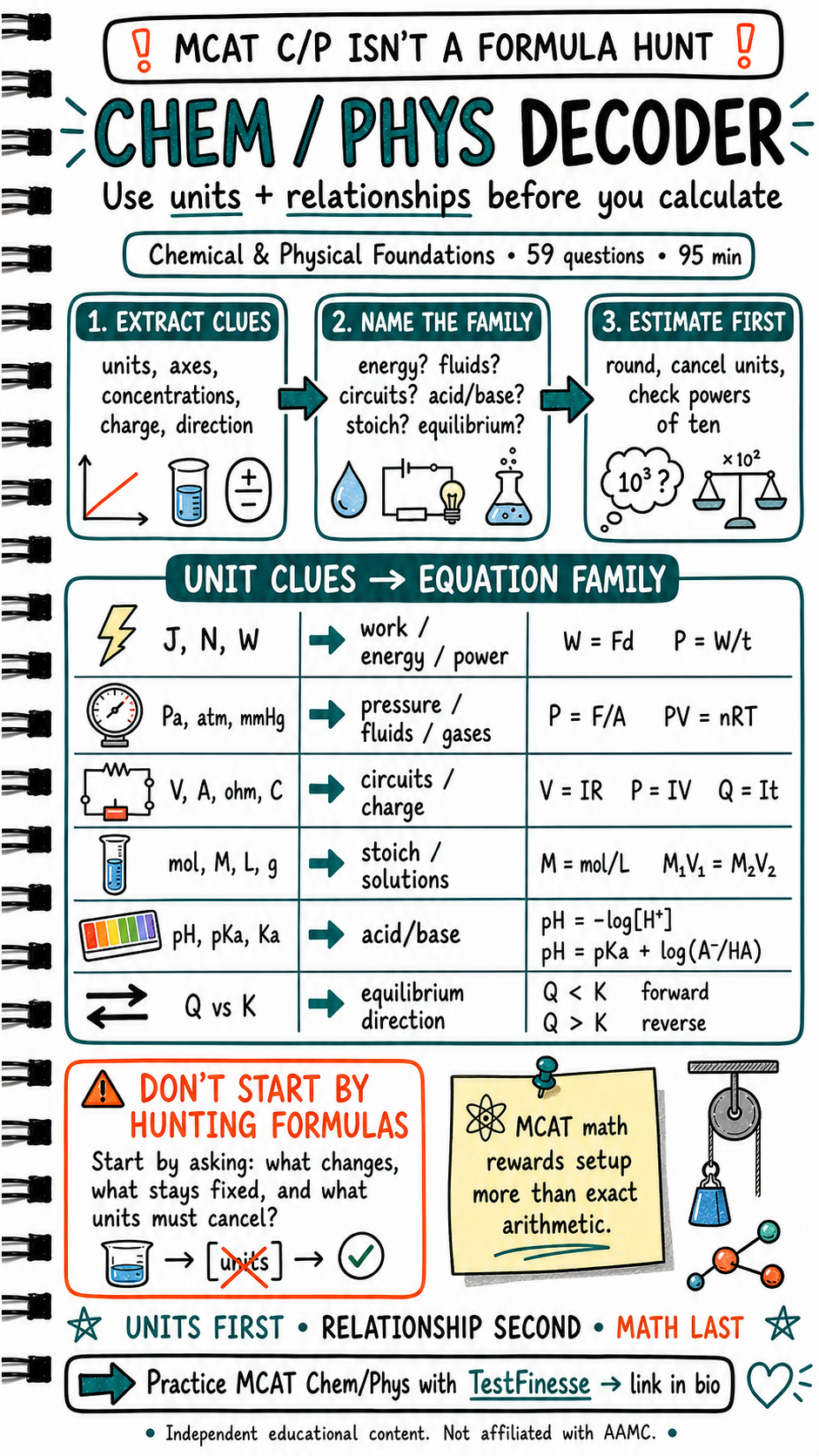
Infographic showing an MCAT Chem/Phys decoder strategy for Chemical and Physical Foundations, including extracting clues, naming equation families, estimating first, matching units to formulas, and avoiding formula hunting.

MCAT Chem/Phys Decoder: Use Units and Relationships Before You Calculate
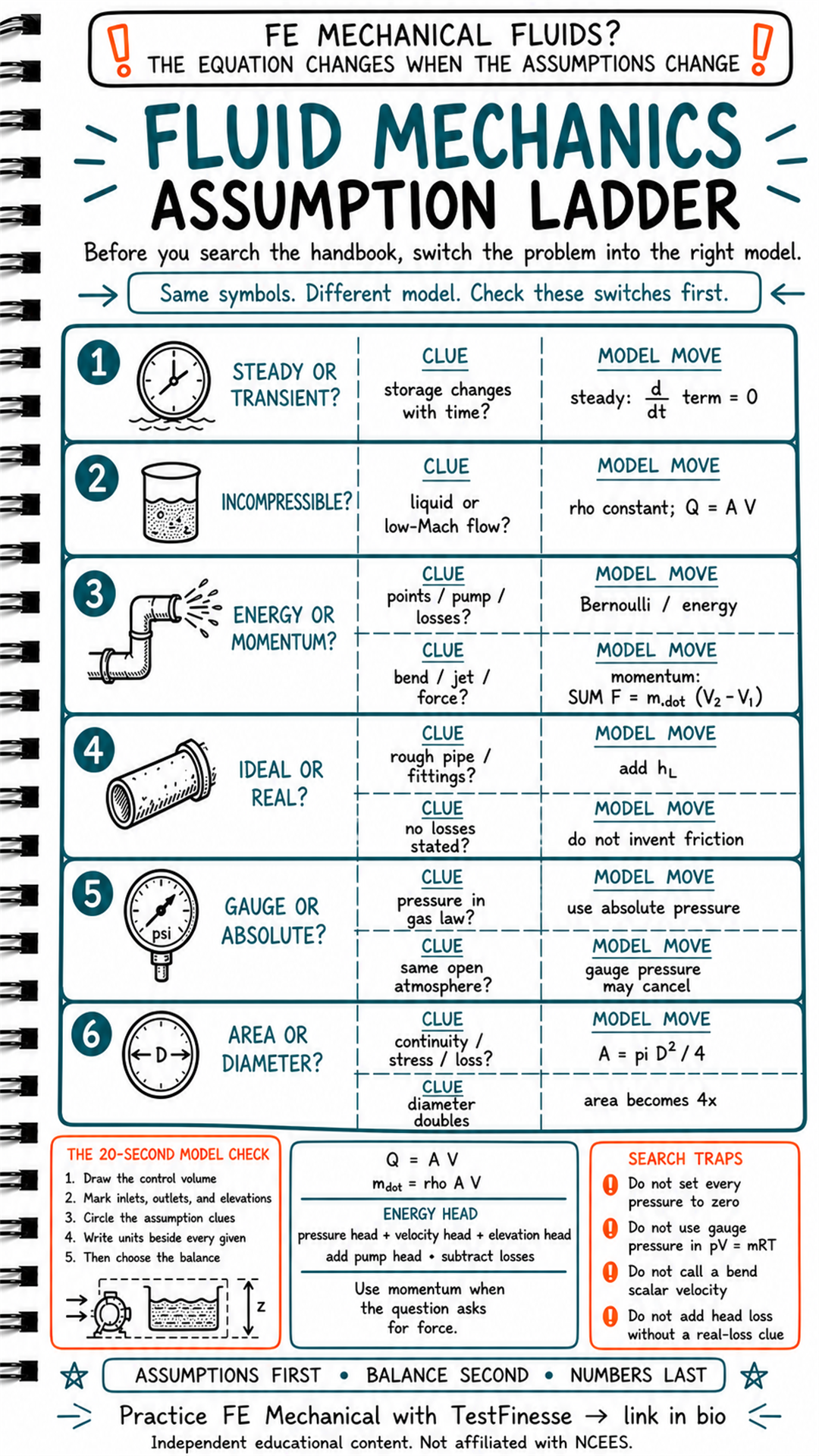
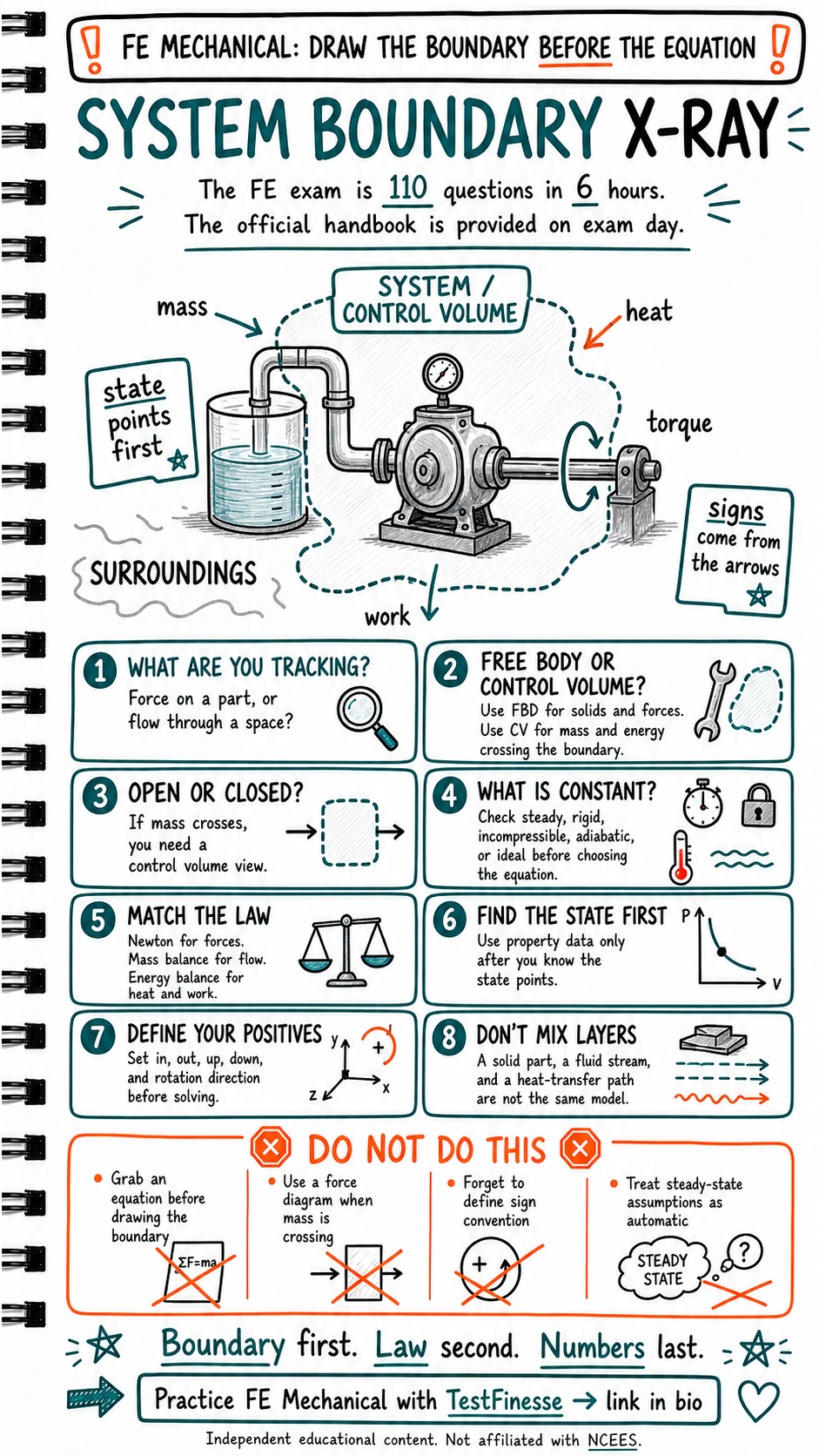
Infographic showing an FE Mechanical problem-recognition method that uses conserved quantities, units, assumptions, prompt clues, search traps, and a 20-second setup to find the right FE Reference Handbook section faster.

FE Mechanical Problem Recognizer: How to Classify the Problem Before You Search Formulas

Infographic showing a TEAS calculation playbook with math setup steps, ratios, percent change, rates, metric conversions, area and volume units, geometry formulas, mean, density, scientific notation, and common point-losing traps.

TEAS Calculation Playbook: Formulas and Conversions That Turn Word Problems Into Points

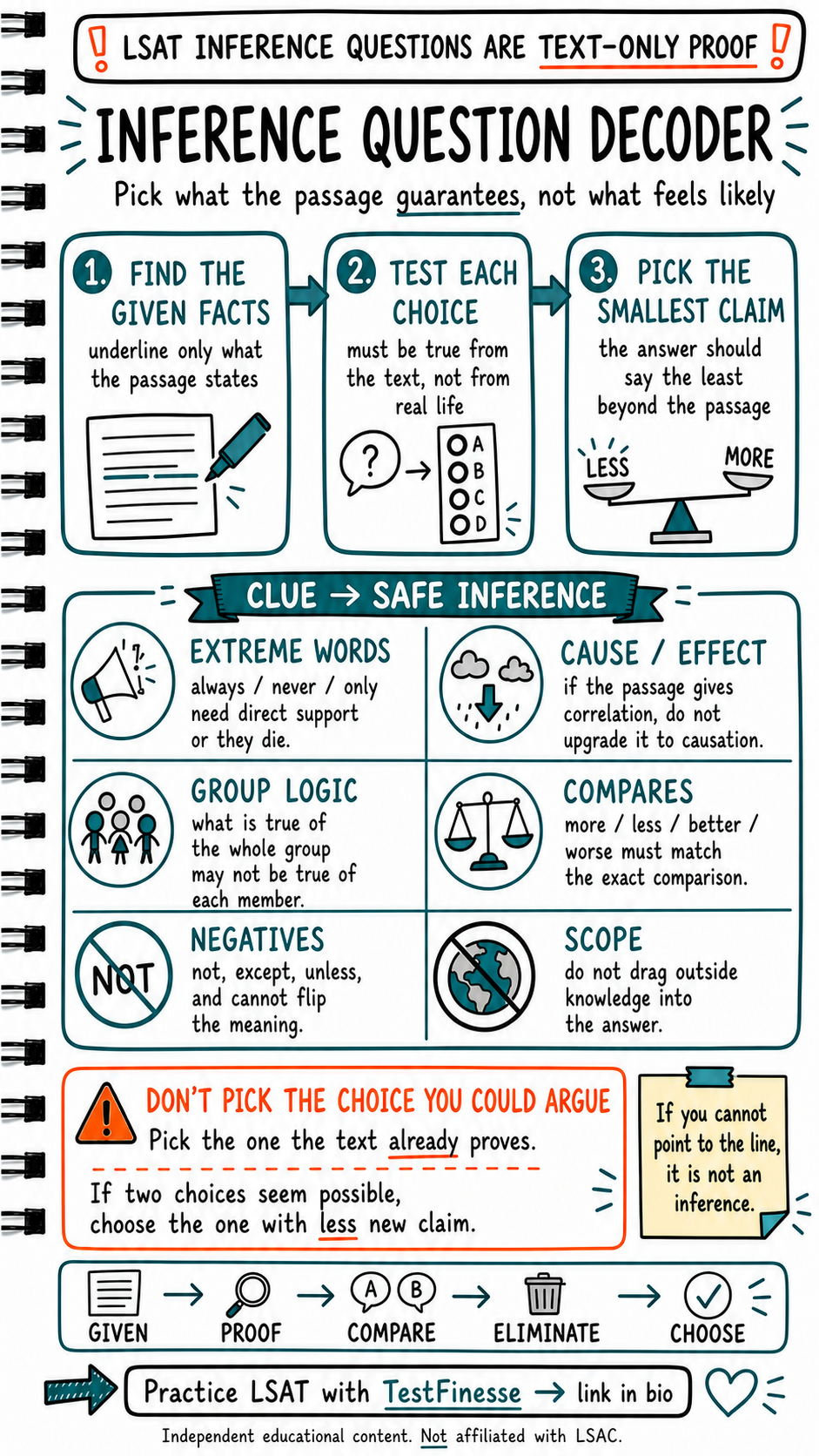
Infographic explaining an LSAT Logical Reasoning argument X-ray method: identify the conclusion, evidence, assumption, and flaw before reading answer choices, then use answer-type rules for strengthen, weaken, necessary assumption, flaw, and inference questions.

The LSAT Argument X-Ray: How to Expose the Gap Before Answer Choices

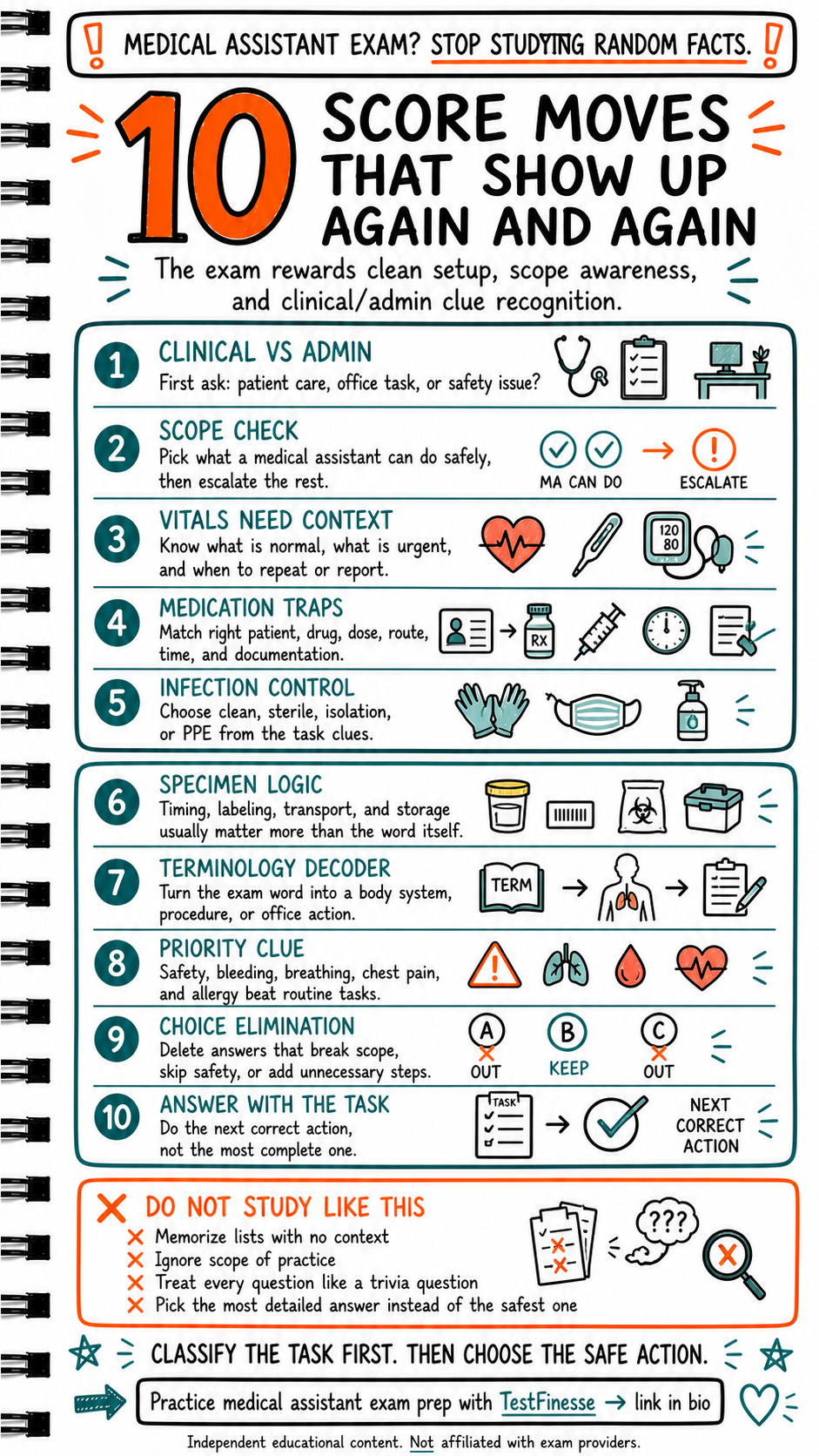
Infographic showing 10 CMA (AAMA) exam prep moves, including building a clinical, general, and administrative error map; prioritizing clinical competency; reviewing vital signs, infection control, procedures, pharmacology, specimens, legal boundaries, and documentation.

10 CMA (AAMA) Exam Moves: Clinical First, Safety Always, Documentation Matters
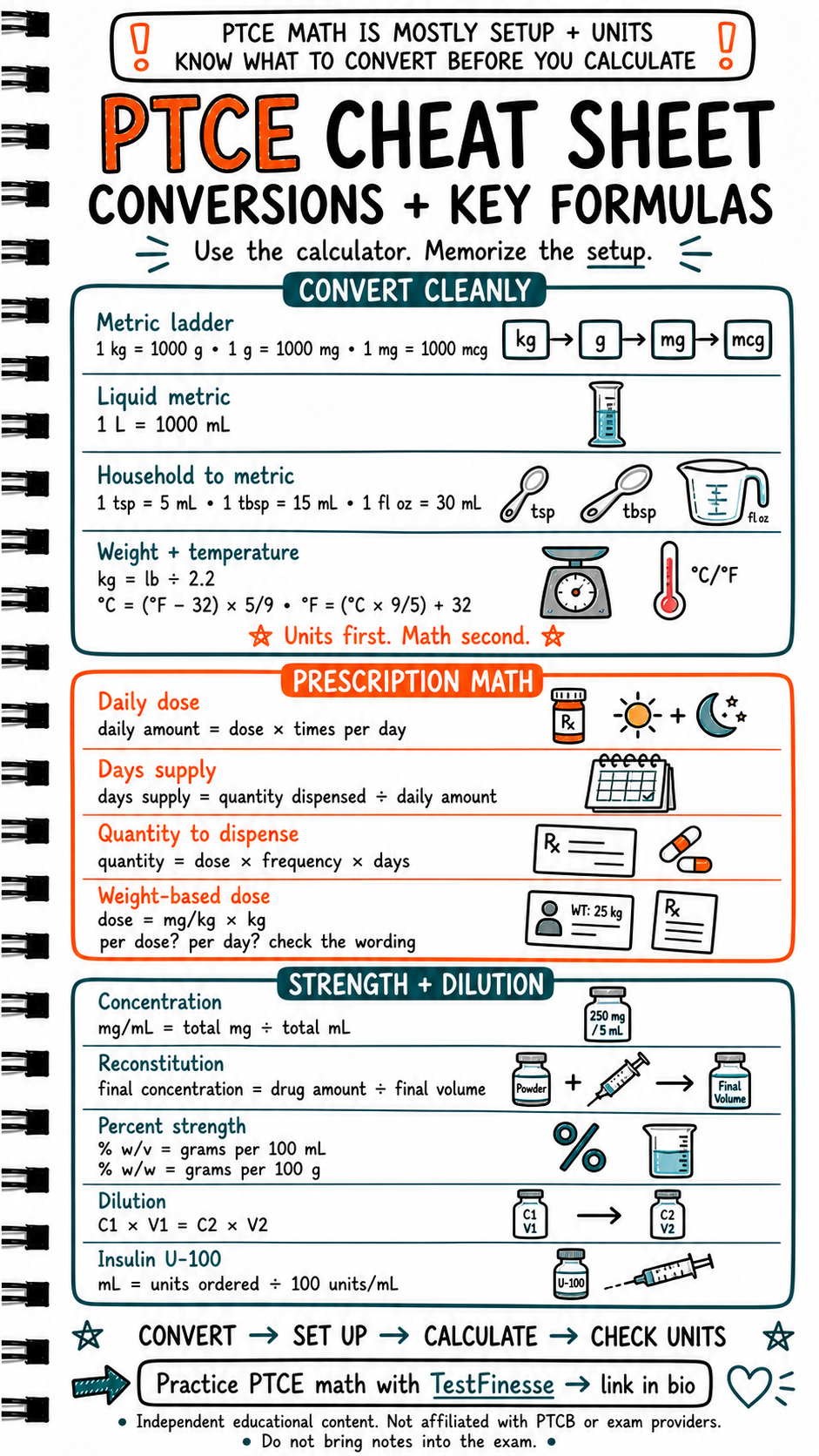
Infographic showing a PTCE pharmacy math cheat sheet with metric conversions, household-to-metric conversions, weight and temperature formulas, prescription math, days supply, concentration, reconstitution, percent strength, dilution, and U-100 insulin calculations.

PTCE Cheat Sheet: Conversions and Key Pharmacy Math Formulas
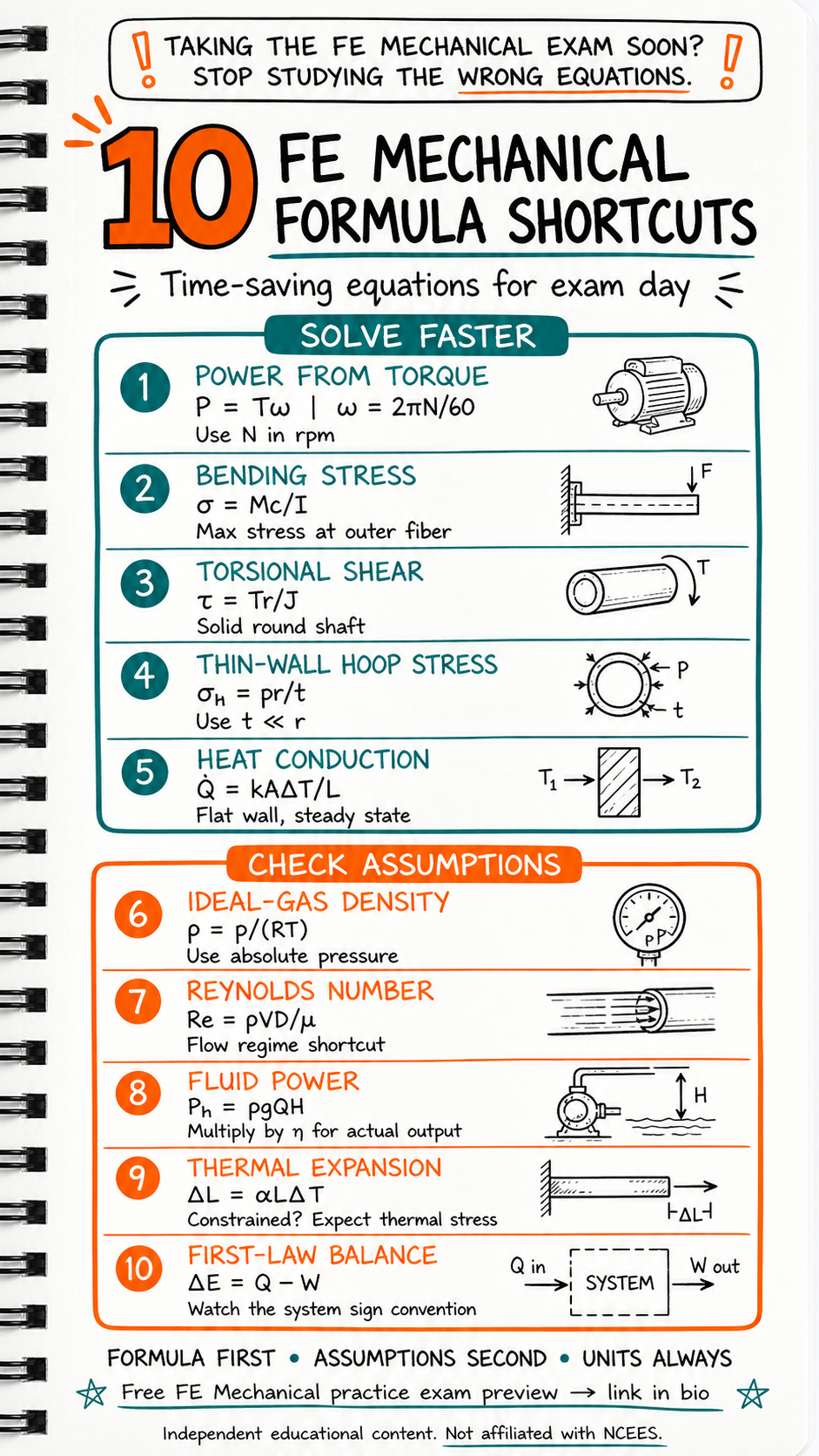
Infographic showing 10 FE Mechanical formula shortcuts, including power from torque, bending stress, torsional shear, hoop stress, heat conduction, ideal gas density, Reynolds number, fluid power, thermal expansion, and first-law energy balance.

10 FE Mechanical Formula Shortcuts: Time-Saving Equations for Exam Day
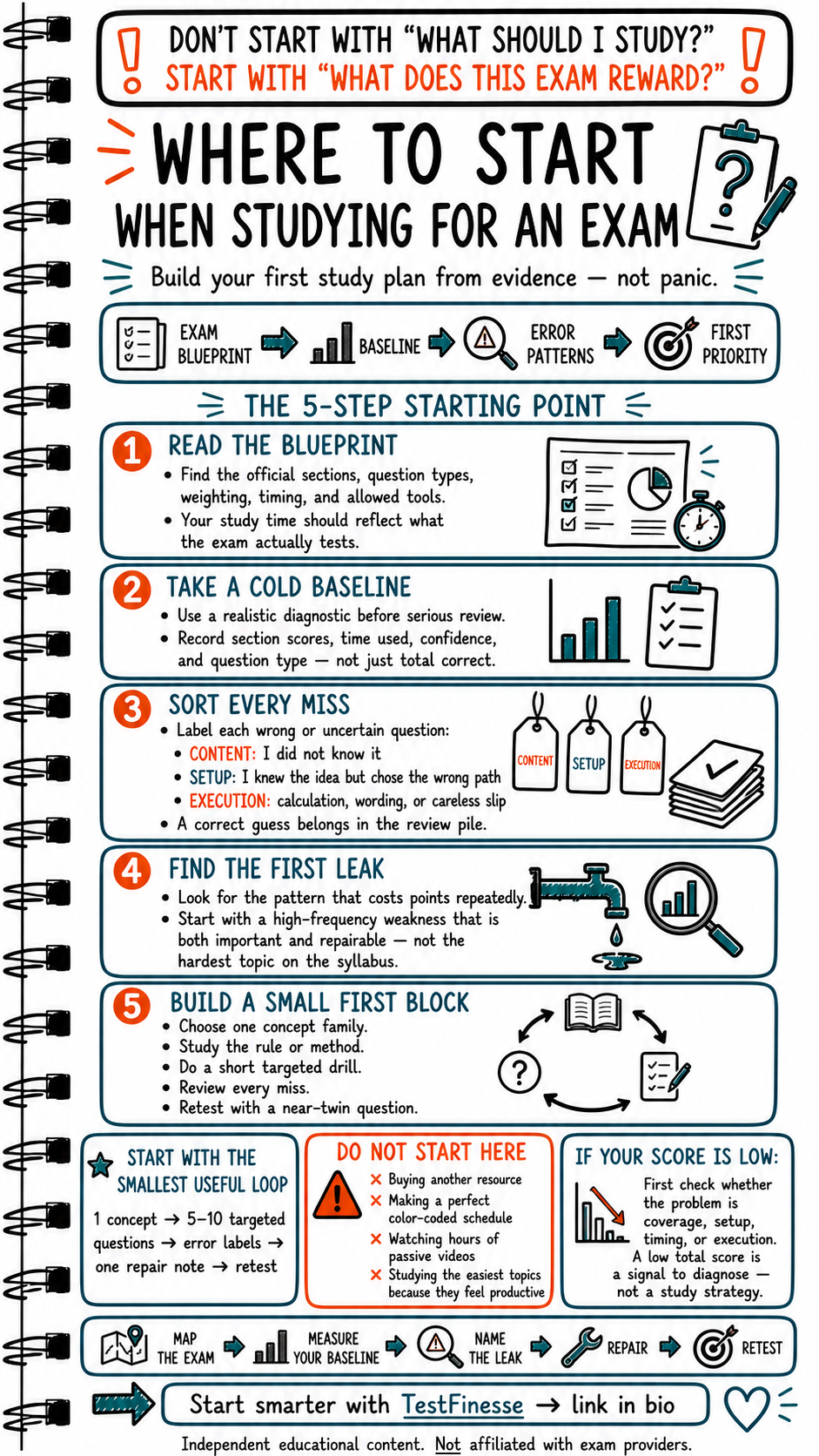
Infographic showing 10 test prep study hacks, including studying by exam weight, using active recall, practicing like the real test, reviewing missed questions, making a formula hit list, using the 90-second rule, mixing practice, teaching out loud, tracking weak spots, and sleeping before cramming.

10 Test Prep Study Hacks That Actually Work

Infographic showing 10 nursing exam prep shortcuts for dosage math and priority questions, including desired over have, IV pump rate, gravity drip rate, weight-based dosing, pounds to kilograms, unit conversion, decimal safety, ABCs, assessment before action, and patient safety checks.

10 Nursing Exam Prep Shortcuts: Dosage Math and Priority Cues

Infographic showing a five-step exam reset sequence for when your mind goes blank: pause, breathe, brain dump, restart small, move smart, and protect your time if still stuck.

Mind Went Blank? Use This Exam Reset Sequence

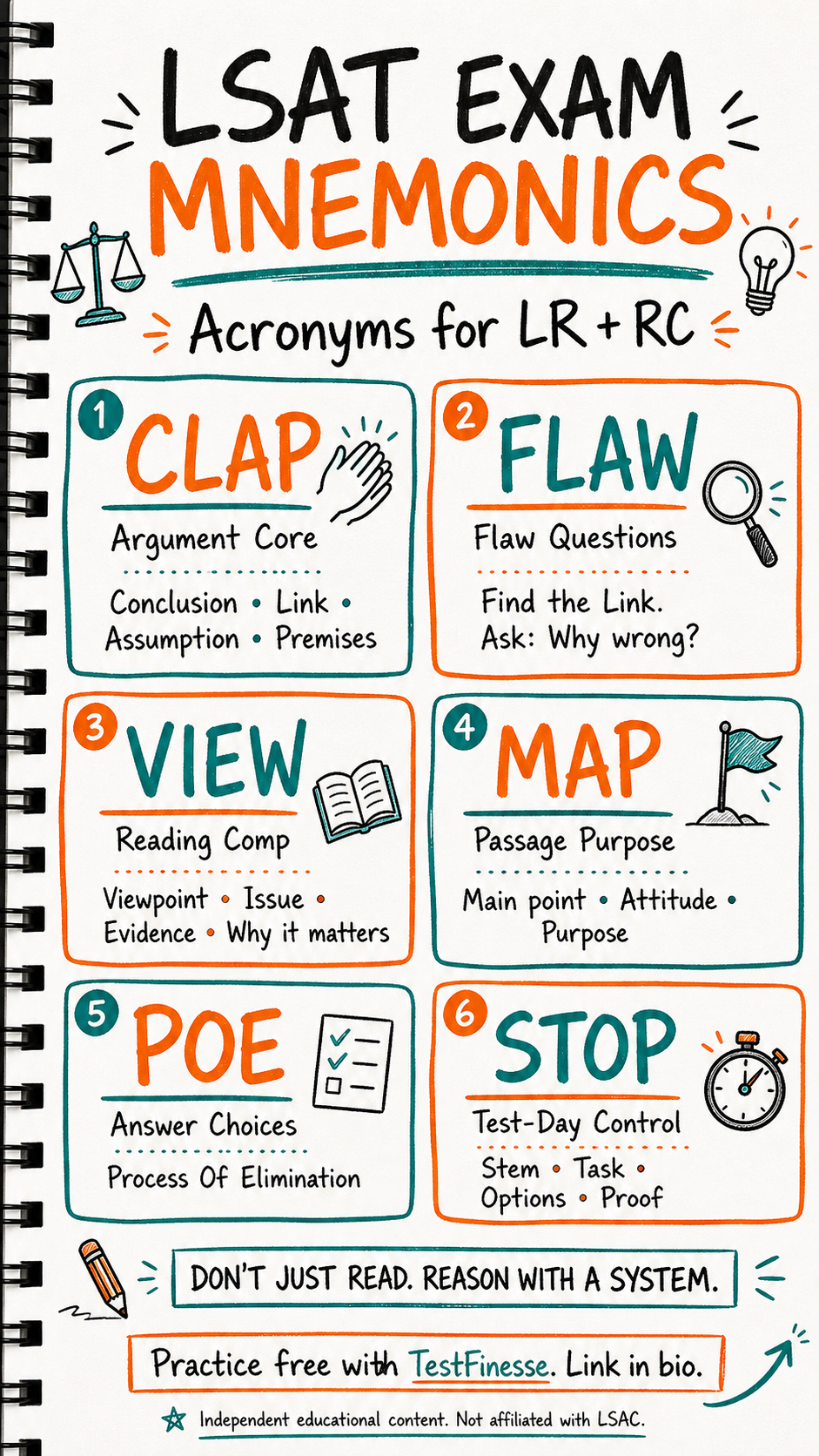
Infographic showing six LSAT exam mnemonics for Logical Reasoning and Reading Comprehension: CLAP for argument core, FLAW for flaw questions, VIEW for reading comprehension, MAP for passage purpose, POE for answer choices, and STOP for test-day control.

LSAT Exam Mnemonics: 6 Acronyms for Logical Reasoning and Reading Comprehension
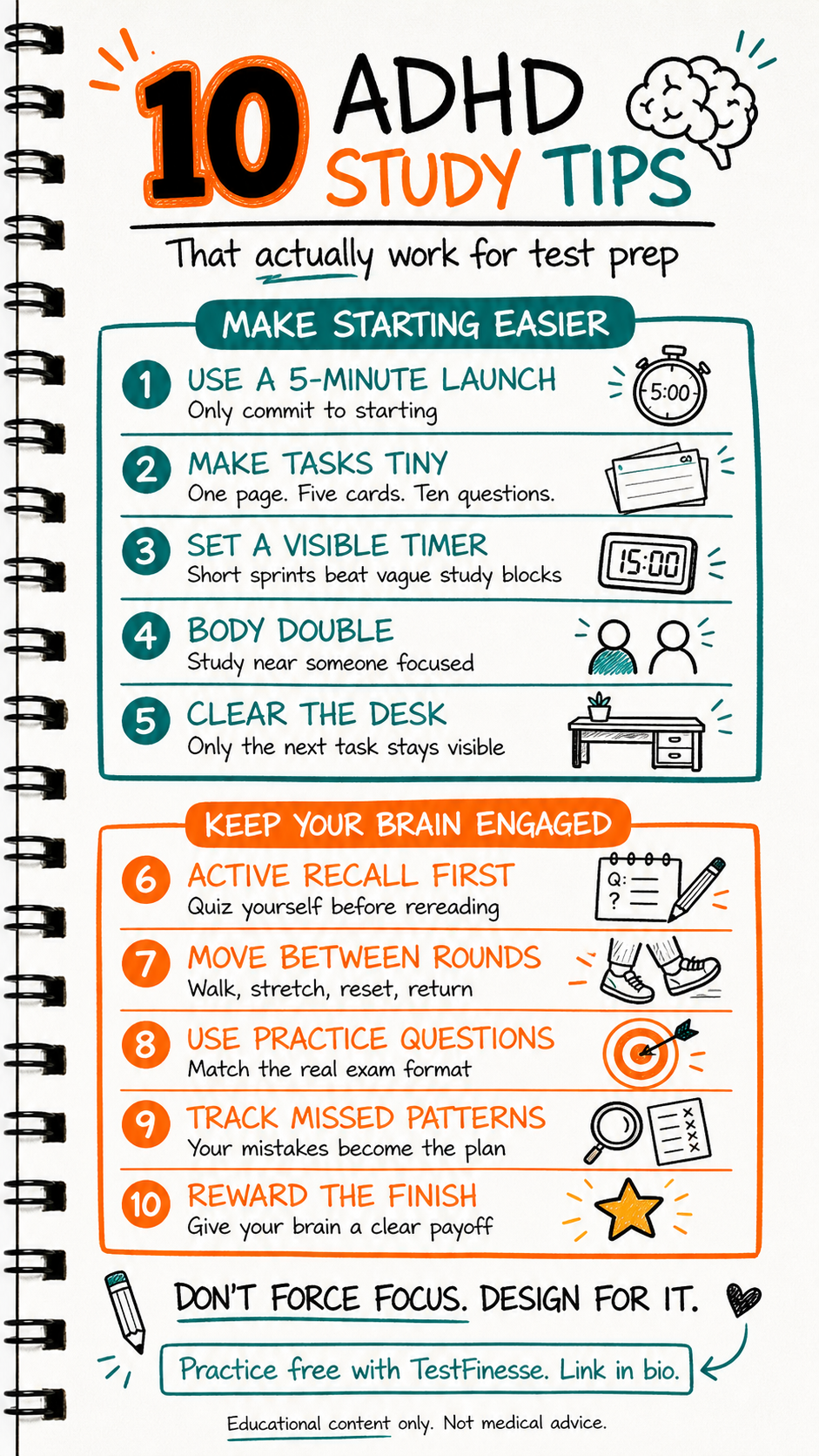
Infographic showing 10 ADHD study tips for test prep, including using a 5-minute launch, making tasks tiny, setting a visible timer, body doubling, clearing the desk, active recall, movement breaks, practice questions, missed-pattern tracking, and rewarding the finish.

10 ADHD Study Tips That Actually Work for Test Prep
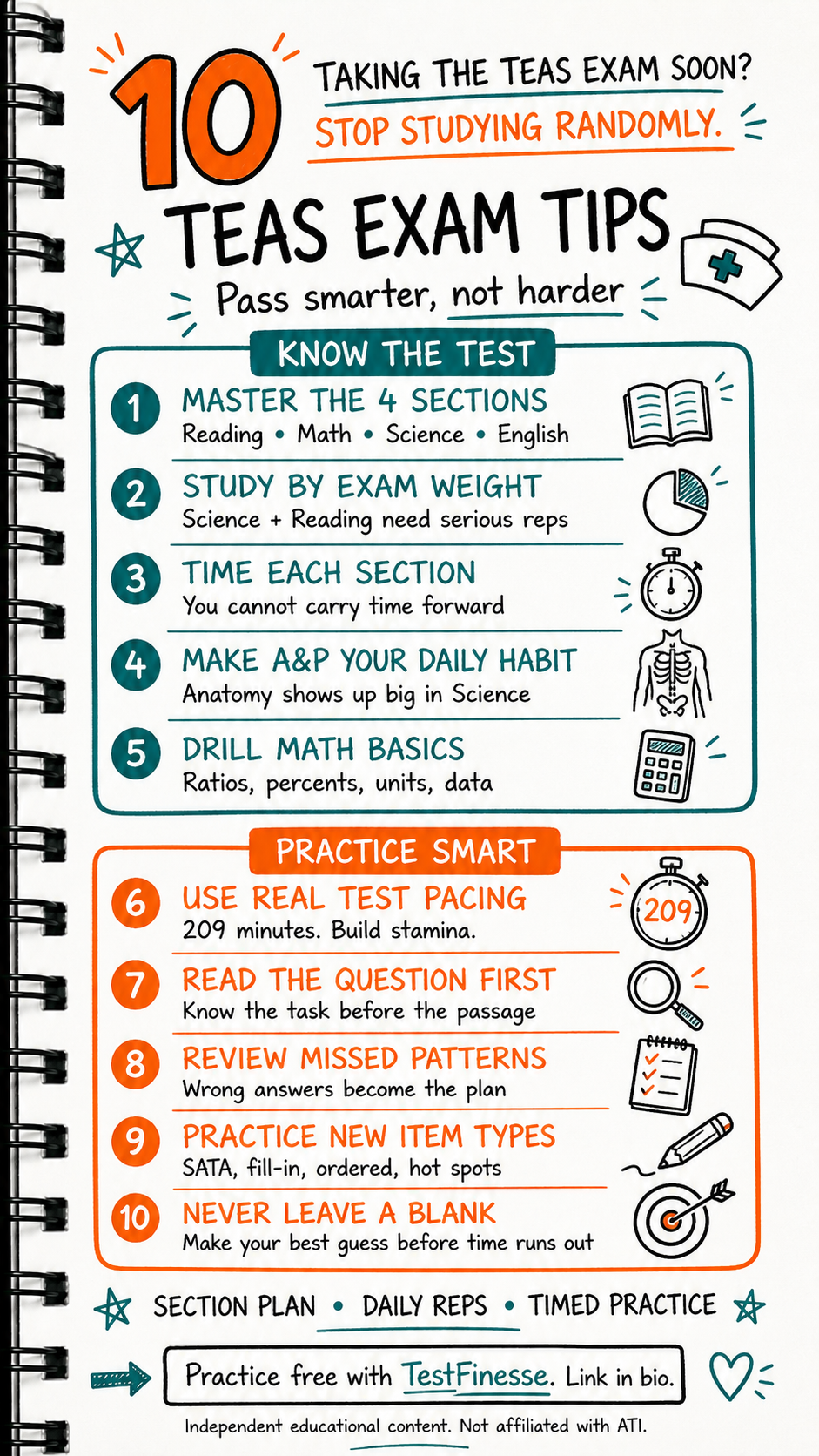
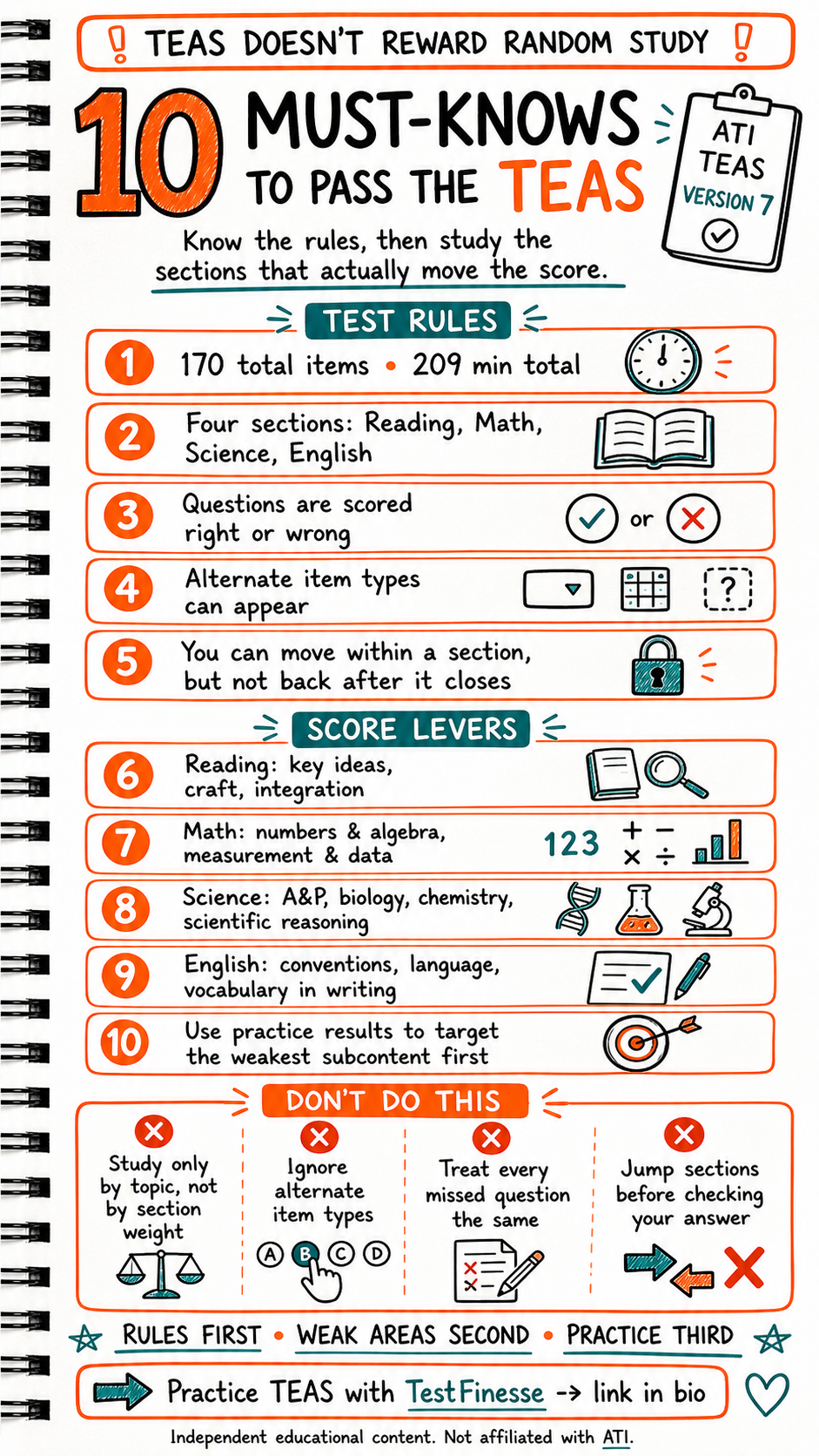
Infographic showing 10 TEAS exam tips, including mastering the four sections, studying by exam weight, timing each section, practicing anatomy and physiology, drilling math basics, using real test pacing, reviewing missed patterns, and never leaving blanks.

10 TEAS Exam Tips: Stop Studying Randomly and Build a Smarter Score Plan
Infographic explaining how to find study motivation by making the first step small, studying for the next mistake, using a 10-minute proof, tracking reps, choosing a stopping point, and connecting practice to a real exam moment.

How to Find Study Motivation: Do Not Wait to Feel Motivated

Infographic showing 10 FE Mechanical exam traps, including RPM to radians per second, gauge versus absolute pressure, diameter versus radius, unit conversions, temperature scales, ideal gas assumptions, steady-state versus transient heat transfer, efficiency direction, sign convention, and answer size checks.

10 FE Mechanical Exam Traps: Easy Points Students Lose Under Pressure

Infographic explaining how effective study groups help students learn by choosing an answer, explaining their reasoning, revealing the correct answer, diagnosing the gap, and discussing the reasoning instead of comparing scores or silently scrolling.

Study Groups That Actually Teach: Why Visible Thinking Beats Bigger Chats

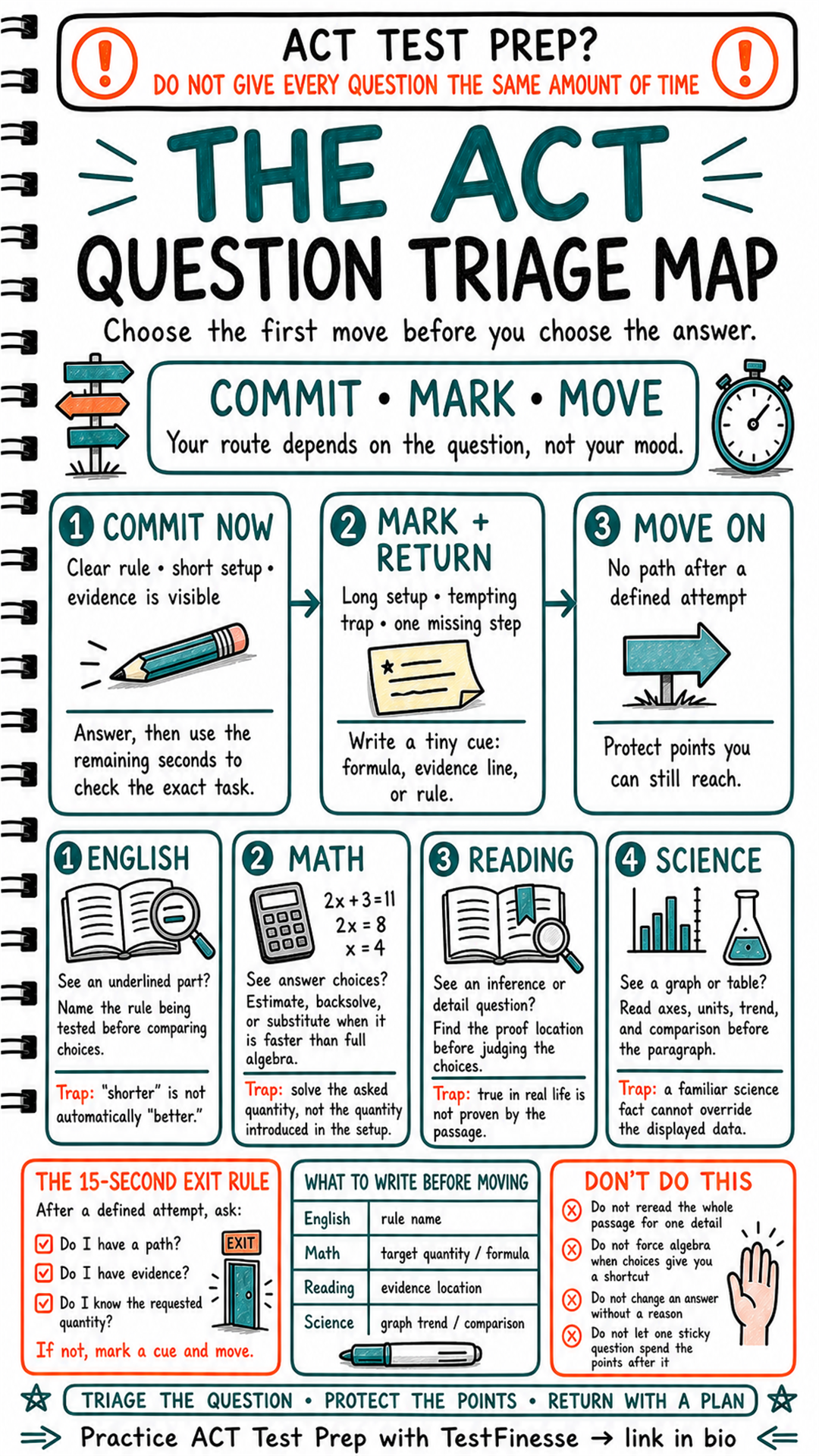
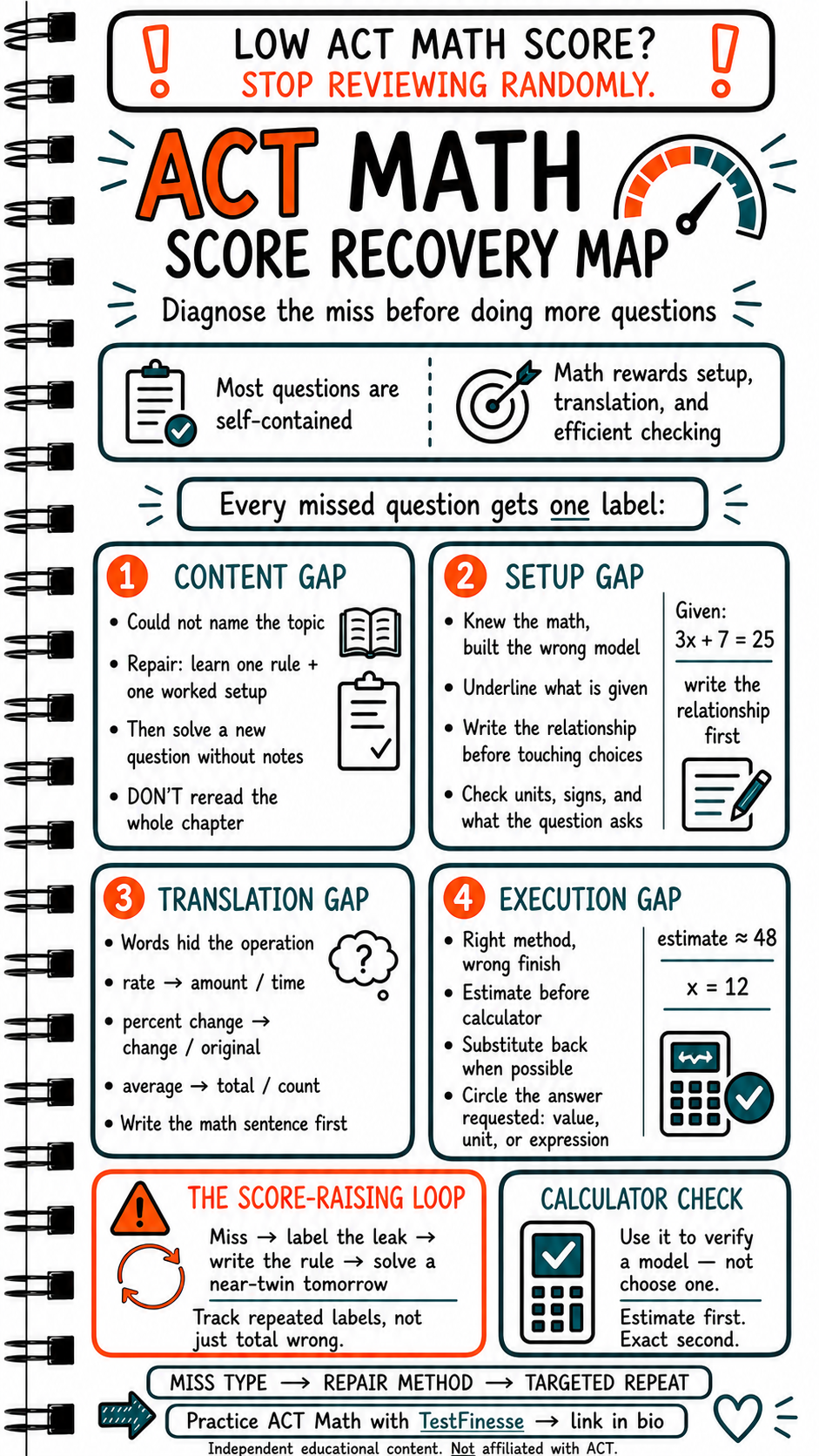
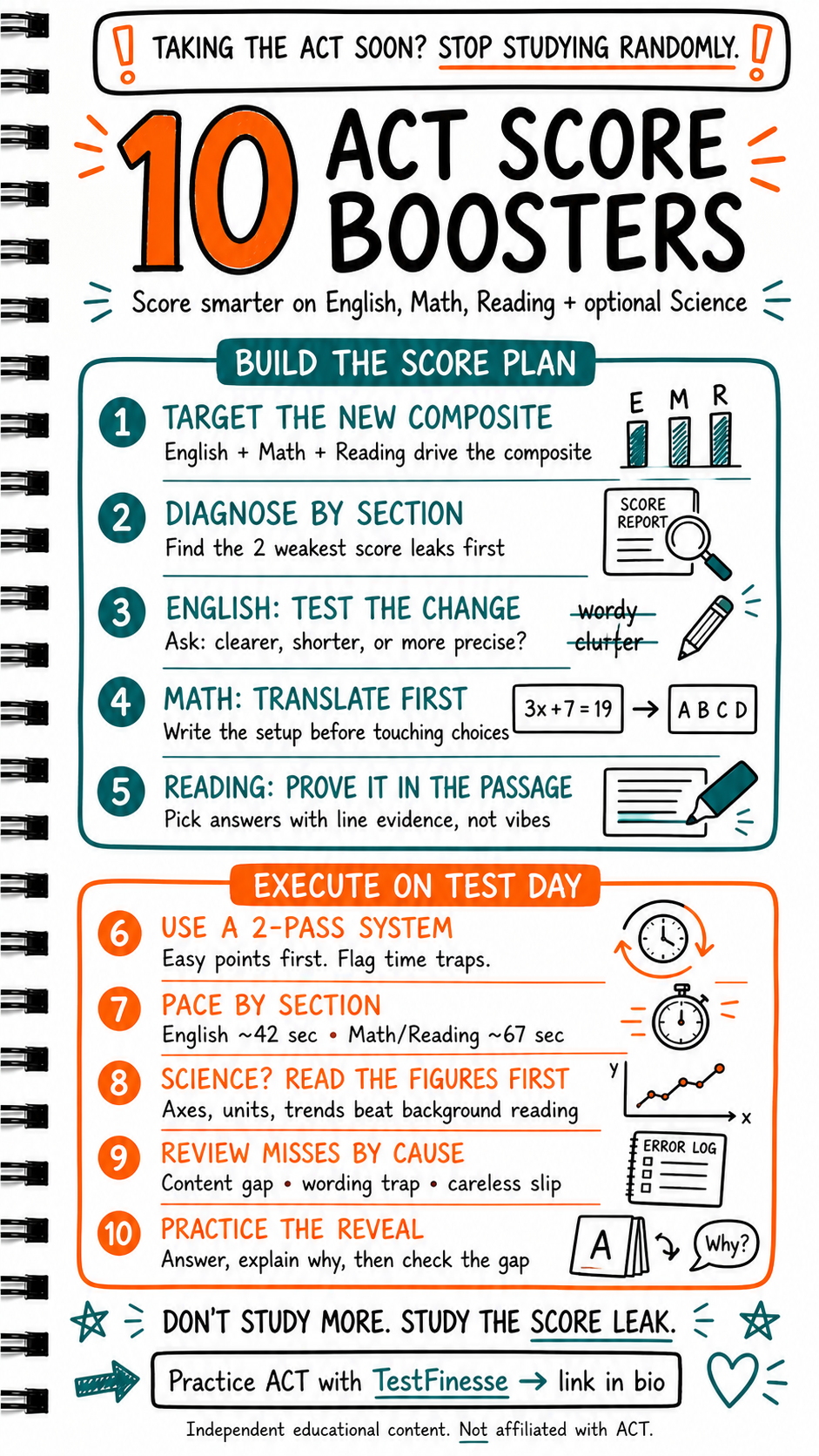
Infographic showing 10 ACT score boosters for the enhanced ACT, including targeting the English, Math, and Reading composite, diagnosing weak sections, using a two-pass system, pacing by section, reviewing misses by cause, and practicing the reveal.

10 ACT Score Boosters: How to Study the Score Leak Instead of Studying Randomly
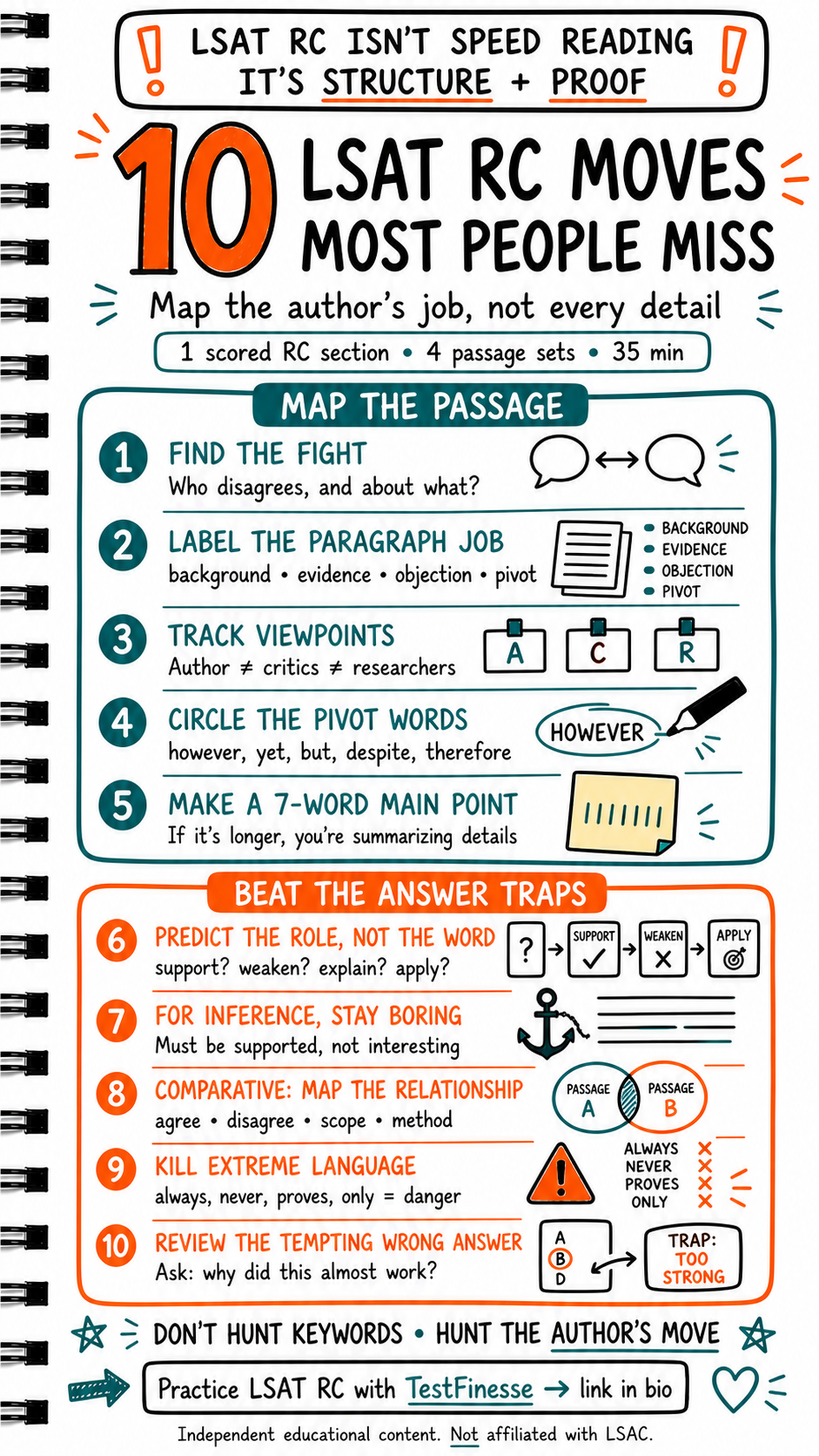
Infographic showing 10 LSAT Reading Comprehension strategies, including finding the argument, labeling paragraph roles, tracking viewpoints, circling pivot words, predicting answer roles, avoiding extreme language, and reviewing tempting wrong answers.

10 LSAT RC Moves Most People Miss: Structure and Proof Over Speed
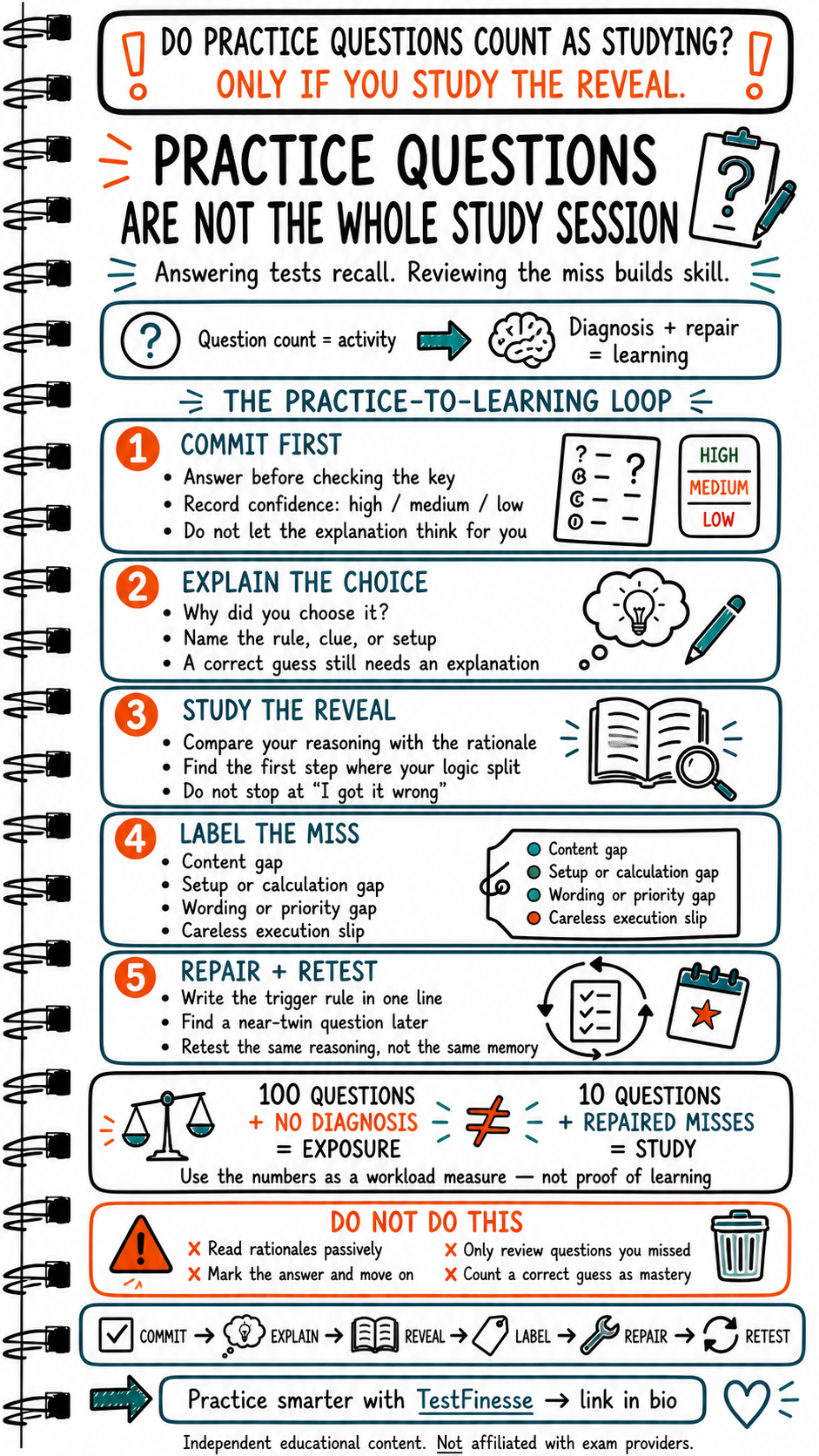
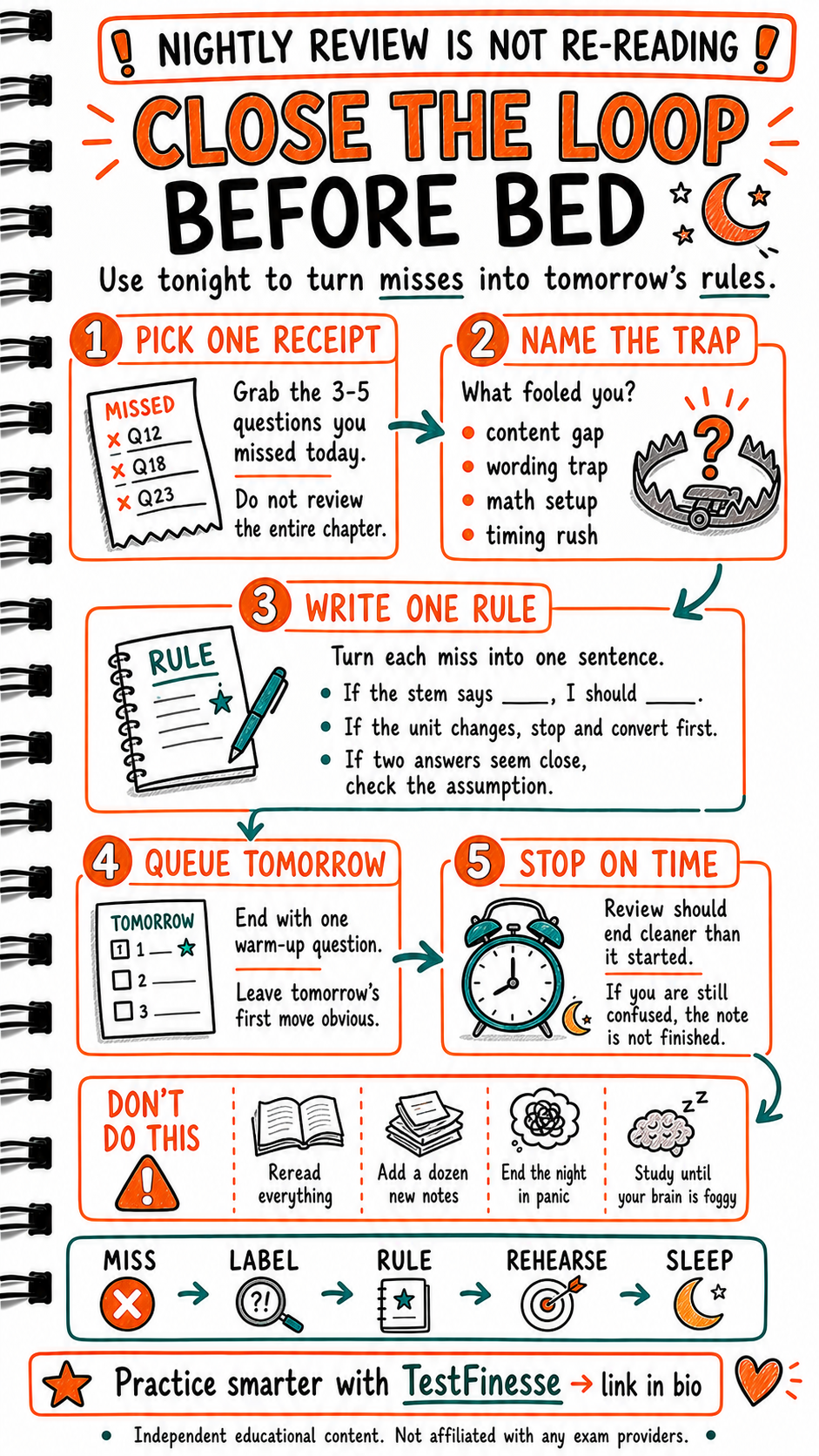
Infographic explaining a practice learning loop for test prep: answer first, rate confidence, explain why, reveal and diagnose the miss, write the fix, and redo a new question later instead of just bingeing questions.

How to Actually Learn From Practice Questions: Turn Every Miss Into a Rule

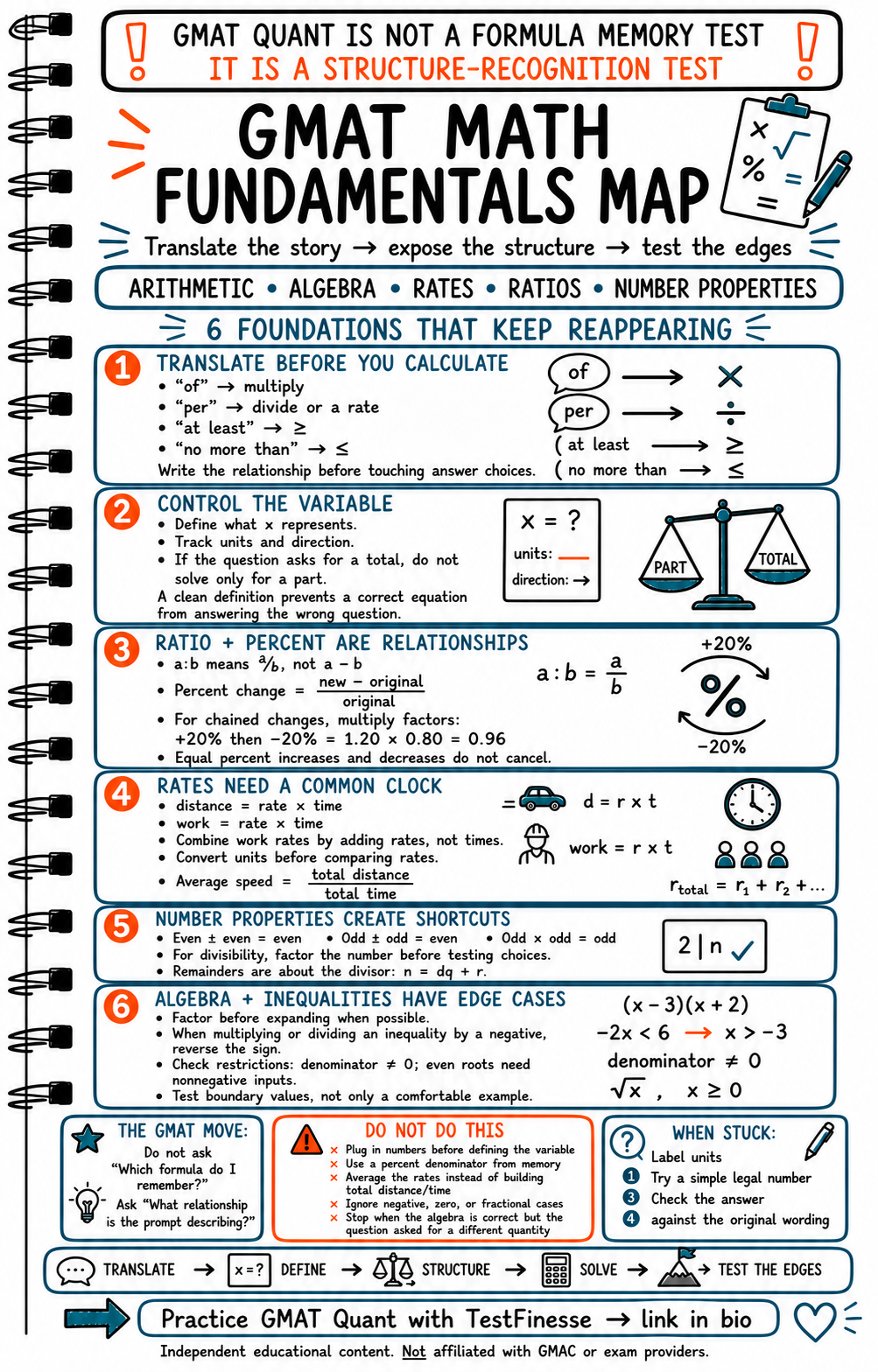
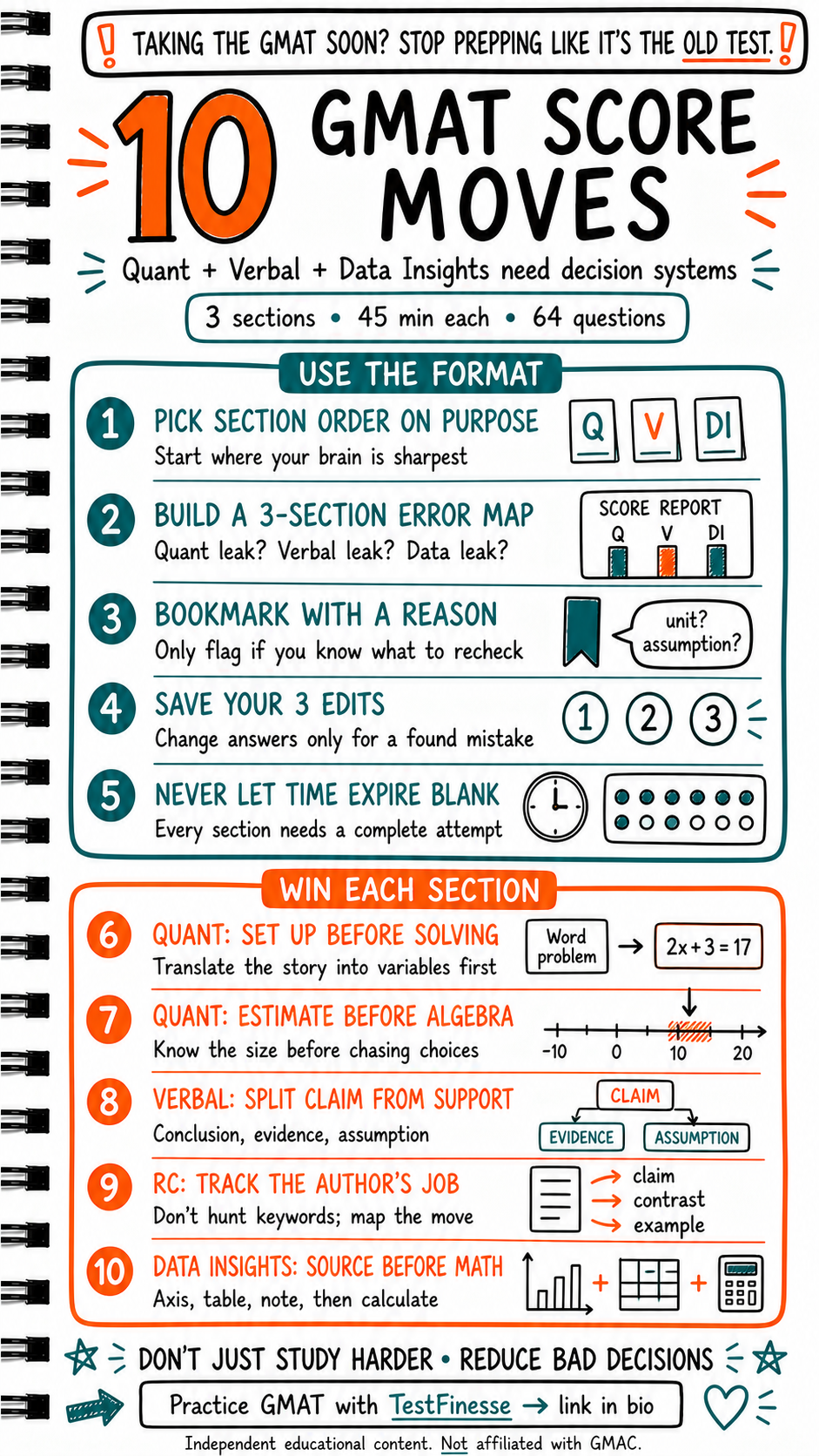
Infographic showing 10 GMAT score moves for the current exam format, including choosing section order, building a three-section error map, using bookmarks carefully, saving edits, pacing every section, and improving Quant, Verbal, Reading Comprehension, and Data Insights strategy.

10 GMAT Score Moves: How to Prep for the Current GMAT Format
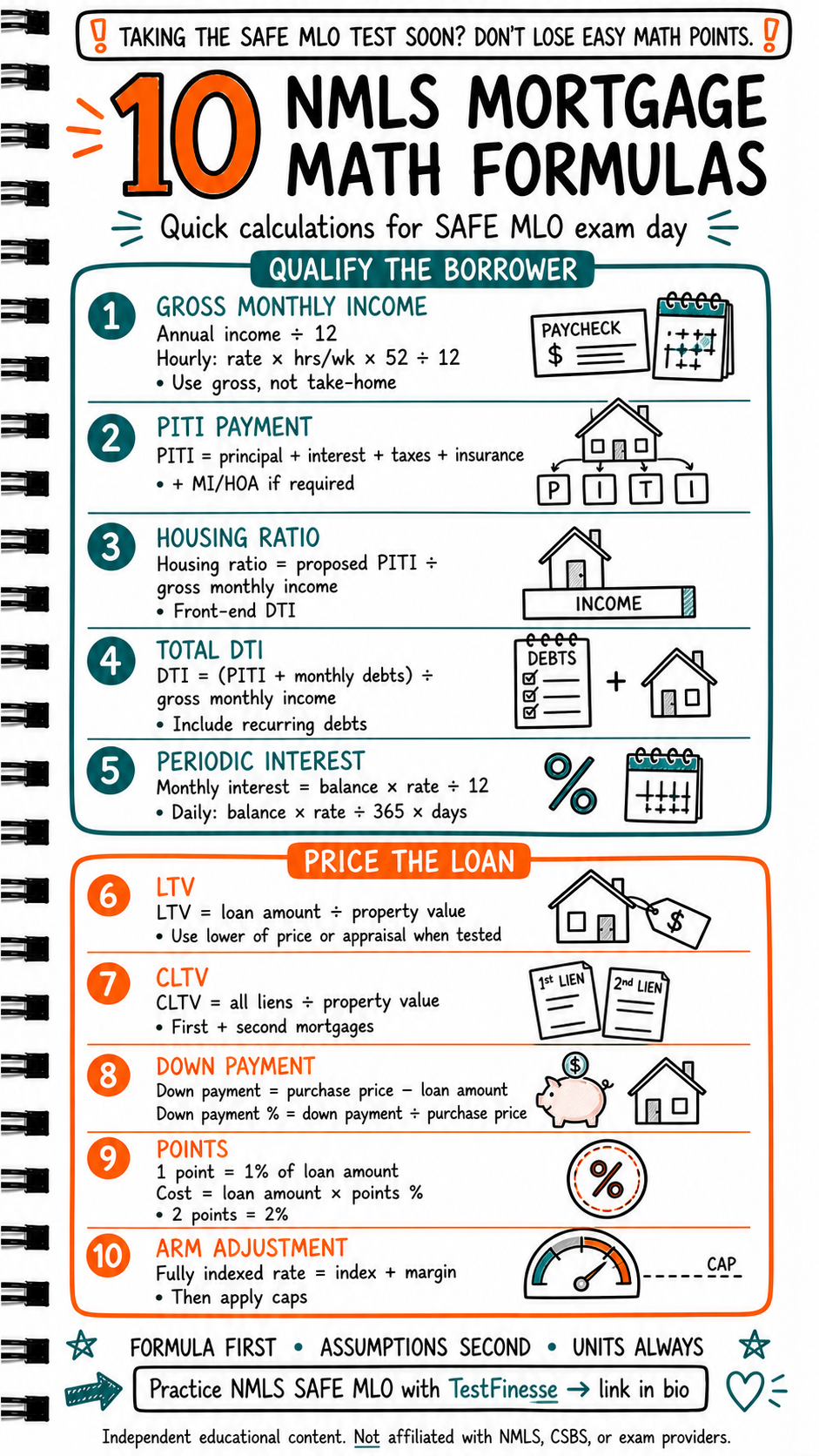
Infographic listing 10 NMLS mortgage math formulas for SAFE MLO exam prep, including gross monthly income, PITI, housing ratio, DTI, interest, LTV, CLTV, down payment, points, and ARM adjustments.

10 NMLS Mortgage Math Formulas: Quick Calculations for SAFE MLO Exam Day
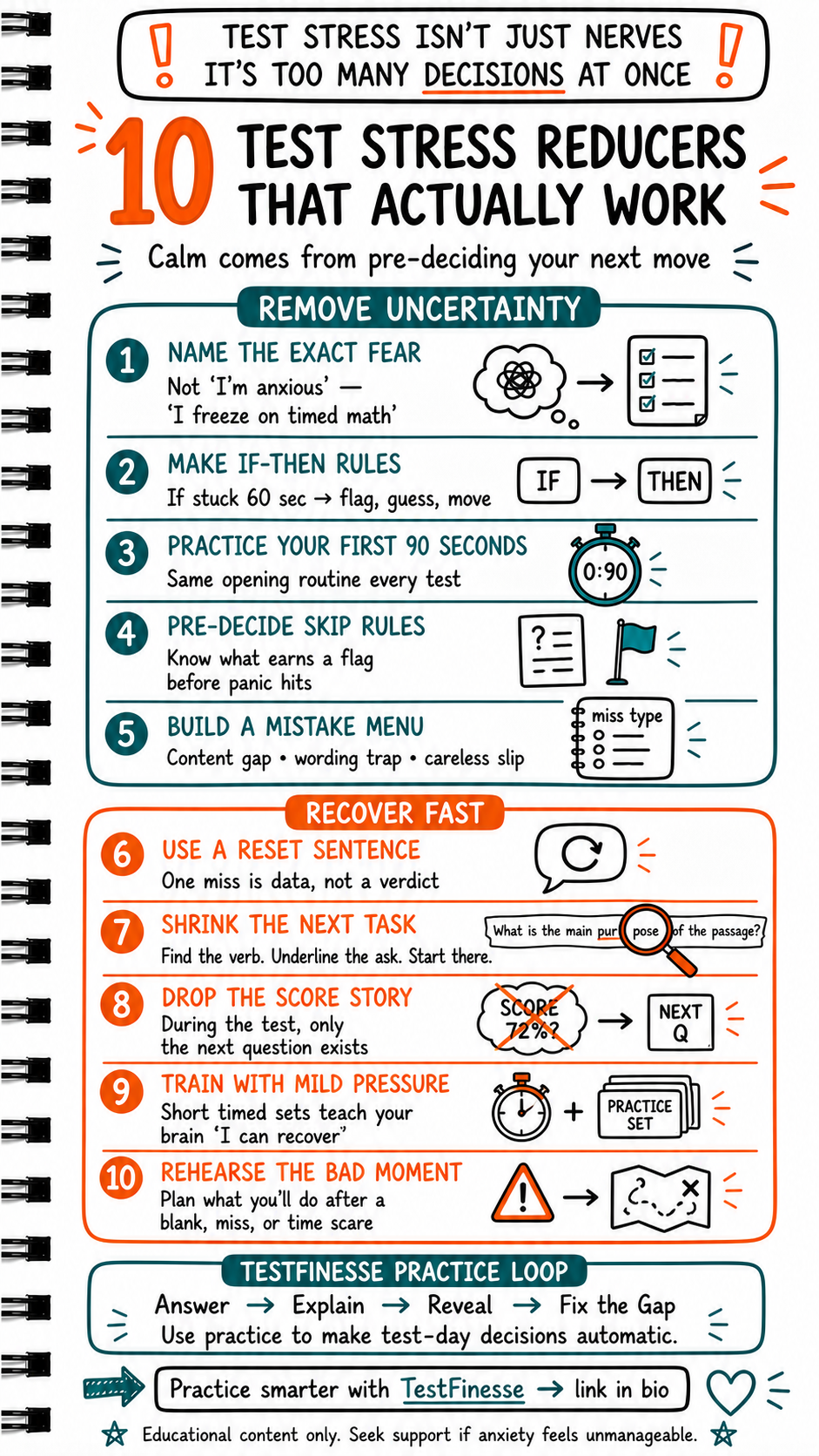
Infographic showing 10 test stress reducers for students, including naming the exact fear, making if-then rules, practicing the first 90 seconds, using reset sentences, shrinking the next task, and building automatic test-day decisions.

10 Test Stress Reducers That Actually Work: How to Stay Calm by Pre-Deciding Your Next Move

Infographic explaining how students who speak English as a second language can improve test performance by translating the task, identifying command verbs, signal words, and trap words, then using a practice loop to fix content or language gaps.

How to Study When English Is Your Second Language: Build a Test-Language Bridge

Study Notes | TestFinesse | Pass your exam on your first try